
The Art of Sleeping Well Abroad: How Luxury Properties Create True Rest
October 12, 2026 |J.C. Yue
The best night's sleep I ever had abroad happened in a room I almost didn't notice.
It was a quiet property outside Kyoto. No chandelier. No marble lobby demanding admiration. Just a tatami floor, a low bed, and a window that framed a single maple tree. I remember lying there, jet-lagged and hollowed out from three cities in five days, and feeling something unfamiliar settle over me.
I slept. Properly. The kind of sleep that repairs you.
After more than a decade accompanying my employer across forty-odd destinations, I've come to believe rest is the truest luxury there is. Not the view. Not the thread count anyone likes to boast about. Rest — the plain, undramatic gift of waking up feeling human again.
Why Sleep Is the Real Measure of a Luxury Property
We talk about hotels the wrong way.
We photograph the lobby, the infinity pool, the plate of amuse-bouche at check-in. But none of that follows you into the dark hours when your body is trying to recover from a red-eye and a time zone it doesn't recognize.
The properties that stay with me are the ones that understood something quieter. They knew that luxury sleep abroad isn't sold at the front desk. It's earned in the small hours, when no one is watching and the only thing that matters is whether you can actually rest.
The Difference Between Comfort and True Rest
Comfort is easy to buy. A soft mattress, a heavy duvet, a room chilled to the perfect temperature.
True rest is harder. It's the absence of everything that pulls you awake — the corridor noise, the glowing standby light, the mattress that's plush but somehow leaves your back aching. Sleeping well in hotels depends less on grandeur and more on the things you never see until they're missing.
I've stayed in suites that cost a fortune and lay awake in every one. I've also slept like a stone in modest rooms that simply got the fundamentals right.
What Luxury Properties Get Right About Rest

Over the years, I started keeping a private list. The details that separated a beautiful room from a restful one.
They rarely appear in the brochure.
The Quiet You Can't See
The first thing I check now, before anything else, is silence.
Great properties treat noise as an enemy. Thick walls. Sealed windows. Doors that close without a slam. In one Tokyo hotel, the housekeeping team moved through the corridor like ghosts — I never once heard a trolley. That kind of engineered calm is deliberate, and it's expensive.
The World Health Organization has written at length about how nighttime noise fractures sleep. The best hotels seem to have read it. Silence is an amenity, even if no one lists it as one.
Light, and the Art of Making It Disappear
The second thing: darkness.
You'd be surprised how many otherwise fine rooms are ruined by a sliver of light under the door or a curtain that doesn't quite meet in the middle. Properties serious about luxury hotel sleep quality invest in blackout drapes that actually work, and they hide every blinking device.
Our bodies read light as a signal to wake. Research on circadian rhythms shows how sensitive we are to even a faint glow. The rooms that let me sleep deepest were the ones I couldn't see my own hand in.
The Small Ritual of the Turndown
There's a reason turndown service survives in fine properties.
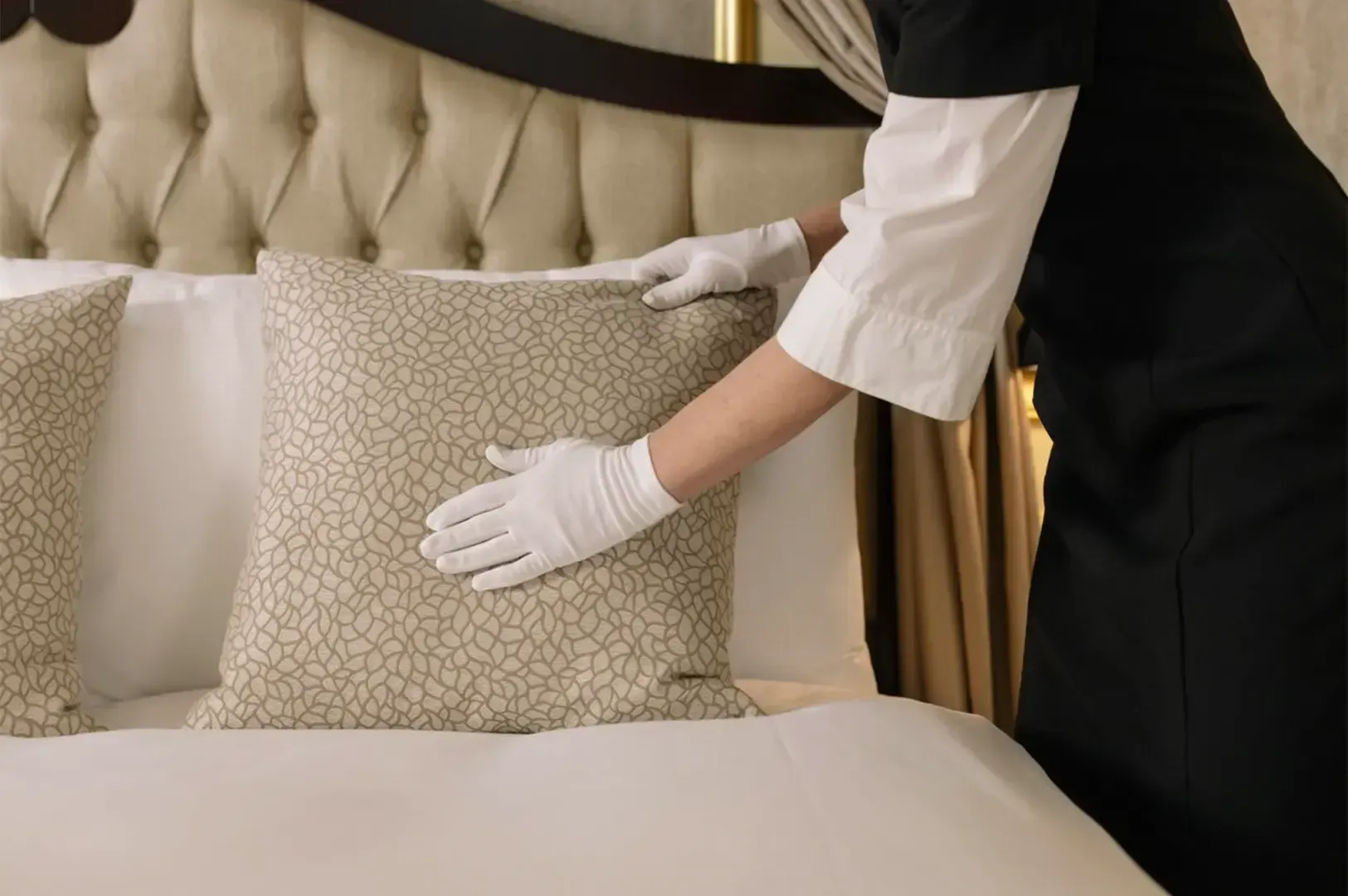
It isn't just the folded corner or the chocolate on the pillow. It's the dimming of lights, the drawing of curtains, the quiet resetting of the room for night. Done well, it tells your tired body a story: the day is over now.
I've watched housekeepers perform this with real care — adjusting the temperature, laying out slippers, leaving a small carafe of water within reach. These are the
luxury property sleep amenities that matter more than any minibar.
The Bed Itself: Where Science Meets Craft

Of course, the bed still counts.
But not in the way the marketing suggests. Thread count is mostly theater. What actually matters is the feel — the give of the mattress, the breathability of the linen, the weight of a duvet on a cold night.
Why the Right Mattress Changes Everything
A good mattress supports your spine without swallowing you whole.
I've learned to notice within minutes whether a bed will betray me at 3am. The finest hotels often work with specialist makers, and some even let guests choose their firmness in advance. That single question — soft, medium, or firm? — tells you a property is thinking about your hotel rest experience before you've arrived.
The Language of Linen
Natural fibers breathe. That's the whole secret.
Egyptian cotton, linen, the occasional silk — good bedding materials regulate your temperature through the night so you don't wake up too hot or too cold. It sounds small. After a long-haul flight, it's the difference between rest and restlessness.
A Note on Pillows
Then there's the pillow menu.
The first time a hotel handed me a card offering seven kinds of pillow, I nearly laughed. Now I understand it. The right pillow is deeply personal, and a property that offers a genuine choice — not just firm or soft, but buckwheat, down, memory foam — is one that takes sleep seriously.
How Great Properties Fight Jet Lag

The hardest part of travel isn't the distance. It's what the distance does to your body clock.
I've arrived in cities where my body insisted it was midnight while the sun blazed outside. The properties that helped me most weren't the flashiest. They were the ones that understood recovery.
Temperature, Air, and the Feel of a Room
Cool rooms help you sleep. Slightly cool, around 18 degrees, is what most sleep specialists suggest.
The best hotels give you real control — a thermostat that works, windows that open where the climate allows, air that feels fresh rather than recycled. In an Amalfi villa one summer, the simple act of opening a shutter to the sea breeze did more for my sleep than any gadget ever has.
Blackout, Blue Light, and Bedside Details
The details compound.
Bedside controls that dim everything at once. Screens with warm-light settings. Clocks that don't glow like a small moon.
The Sleep Foundation is clear on how blue light delays rest, and the properties paying attention have quietly redesigned their rooms around this truth.
The Human Side of Rest

Here's the part the technology can't replace.
You sleep better when you feel safe, held, unbothered. That feeling comes from people, not products.
Service That Knows When to Disappear
The finest service I've witnessed is the kind you never notice.
The staff who remember you don't want a wake-up call. Who leave the corridor quiet at dawn. Who anticipate that a guest arriving off a fourteen-hour flight wants a dark room and silence, not a cheerful tour of the amenities. Great service protects your rest — often by doing nothing at all.
I've spent years on the service side of luxury travel, and I can tell you the best teams treat a guest's sleep as sacred.
The Ryokan Lesson
Nowhere taught me this better than a traditional ryokan in the Japanese countryside.
No towering headboard. No ceiling of gold. Just a futon laid out with quiet ceremony, a hot bath before bed, and a stillness that seemed to soak into the walls. It reminded me that rest is cultural, not just commercial — that some of the world's oldest hospitality traditions understood sleep long before the word "amenity" existed.
What This Means for the Way You Travel
You don't need to spend a fortune to sleep well abroad. But you can learn to look for the right things.
Questions Worth Asking Before You Book
Ask about noise. Ask about blackout curtains. Ask whether the room faces a quiet courtyard or a busy street.
A property that answers these questions warmly is one that thinks about sleeping well in hotels the way you do. The Singapore Tourism Board and similar official resources can point you toward properties with real reputations for rest, not just for spectacle.
One Last Thought Before You Sleep
Bring a little of home with you.
A familiar scent. Your own pillowcase, if you're particular. A small ritual that tells your body it's safe to let go. I carry a soft grey jumper that smells faintly of home, and on hard nights, it does more than any luxury I've been handed.
The Truest Luxury of All

I've slept in penthouses above glittering cities and in quiet rooms overlooking a single tree.
The tree won.
Because in the end, the real measure of a luxury property isn't how it looks when you arrive — it's how you feel when you wake. Rested. Restored. Ready to meet a new city as yourself, not as a hollowed-out version of you.
That, more than any view, is what I've come to treasure. The rooms that gave me back my own mornings. The quiet properties that understood the oldest luxury there is: a good night's sleep, far from home, in a place that somehow made rest feel possible.
If this resonated, you may also enjoy
Overlooked Amenities: The True Luxury in Accommodations, where the quiet details that matter most reveal what real luxury is made of.