
Bangkok's Second Neighborhoods: The Residential Districts Changing How Visitors Experience the City
October 5, 2026 |J.C. Yue
The first time I truly understood Bangkok, I wasn't in Bangkok at all — not the one people picture.
My employer had a rare free morning, and I'd slipped away to find breakfast. I ended up in a lane off Charoen Krung where an auntie was ladling rice congee into bowls, a fan clacking somewhere behind her, the smell of ginger and fried garlic hanging in the wet morning air. No English menu. No queue of tourists. Just a plastic stool, a cracked table, and a bowl that tasted like someone's grandmother had made it.
That morning stayed with me longer than any rooftop bar ever has.
Why the Usual Bangkok Isn't the Whole Story
Most first-time visitors meet Bangkok the same way. The Grand Palace. The malls of Siam. The neon of Sukhumvit. It's dazzling, and I won't pretend otherwise — I've walked employers through all of it.
But after enough visits, you start to feel the edges of that version. It performs for you. And a place that performs keeps you at arm's length.
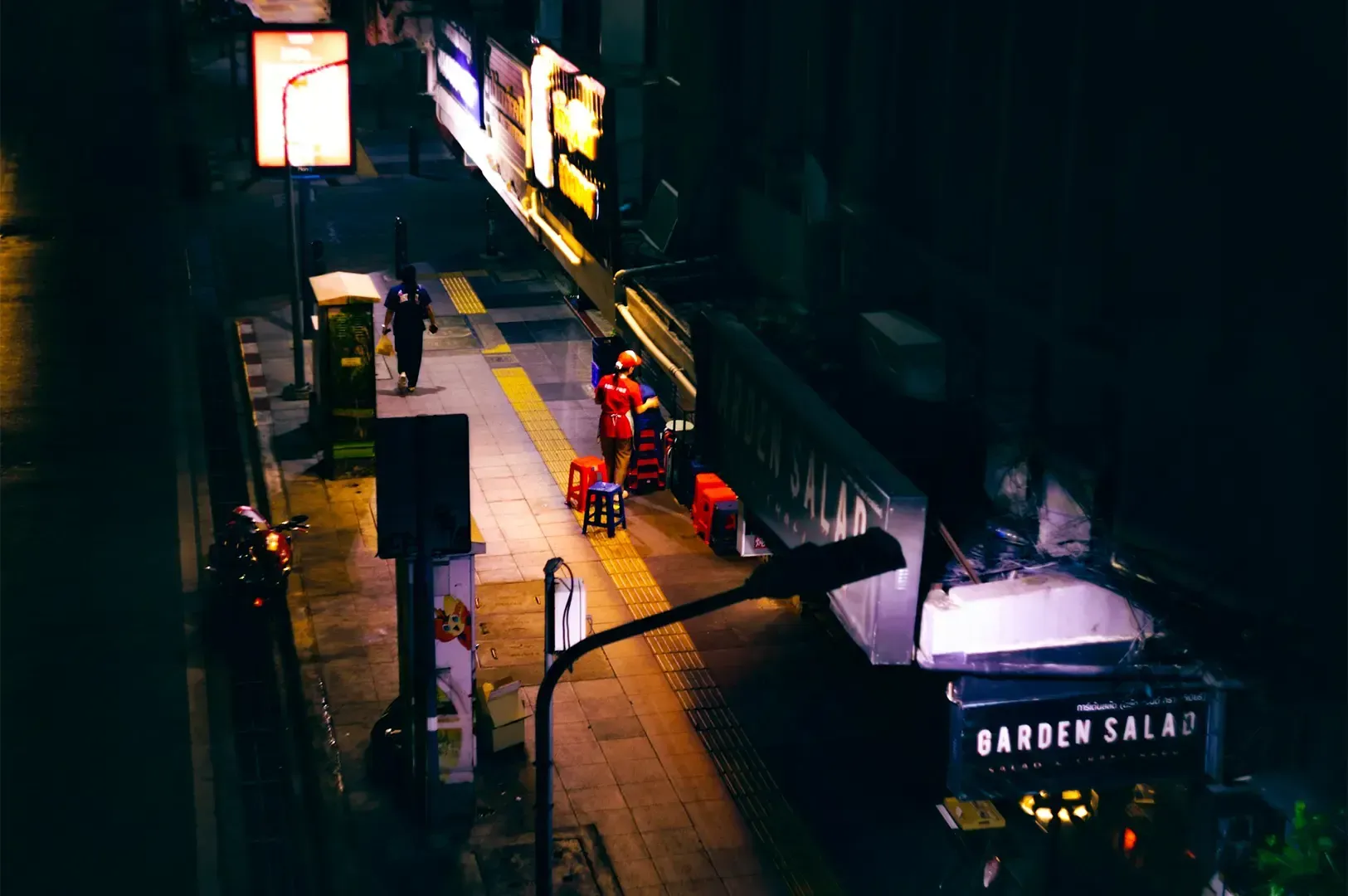
The Bangkok that lingers is quieter. It lives in the residential streets where families still eat dinner on the pavement, where the temple bell competes with a motorbike, where nobody is trying to sell you anything at all.
These are the Bangkok residential neighborhoods that are slowly changing how people experience the city — not through spectacle, but through ordinary life left gloriously undisturbed.
Understanding Bangkok's Residential Districts
Bangkok is vast. The city sprawls across dozens of districts, and the ones that draw crowds are a tiny fraction of the whole. Step one canal over from the tourist map, and the temperature of the place changes entirely.
I've come to think of these as the city's second neighborhoods — not second-rate, but second in the sense that you find them only after the obvious ones. They reward a slower kind of traveler.
What Makes a District Feel "Local"
It isn't the absence of visitors. It's the presence of routine.
The morning market that exists for the people who live there. The barber who's been on the same corner for thirty years. The hidden neighborhoods where a coffee costs half what it does in Thonglor, and the uncle remembers your face by the second visit.
That's the texture I chase whenever my schedule allows it.
Charoen Krung: The Old Soul Getting a Quiet Second Life

If you visit one Bangkok local district first, make it Charoen Krung.
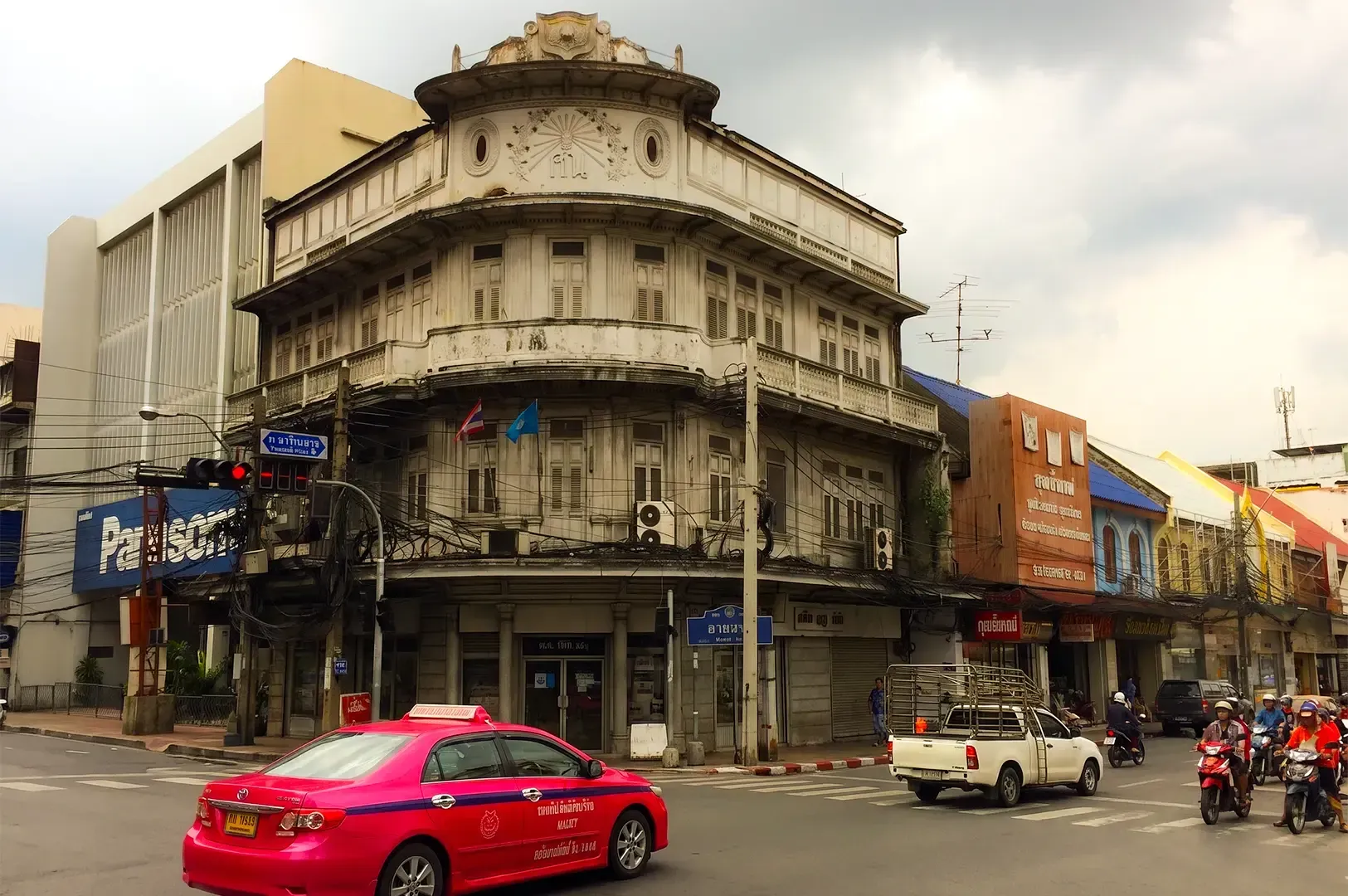
It's one of the oldest roads in the city, and it wears its history openly — faded shophouses, Chinese-Portuguese facades, spice traders who've been there for generations. But in recent years, quiet creative spaces have opened between the old businesses. A gallery here. A specialty roaster there.
Where the Neighborhood Eats
I once spent an afternoon following the smell of grilling pork down a side soi. It led me to a family stall with four tables and no name I could read.
The soup arrived without ceremony. Herbal, dark, a little bitter. The kind of bowl you don't photograph because you're already eating it.
That's the Charoen Krung I recommend. Not the polished cafés — though they're lovely — but the
street-level food that has fed this district for decades.
The Tourism Authority of Thailand can point you to the landmarks; the good eating happens in the gaps between them.
Talat Noi: The Riverside Maze Worth Getting Lost In

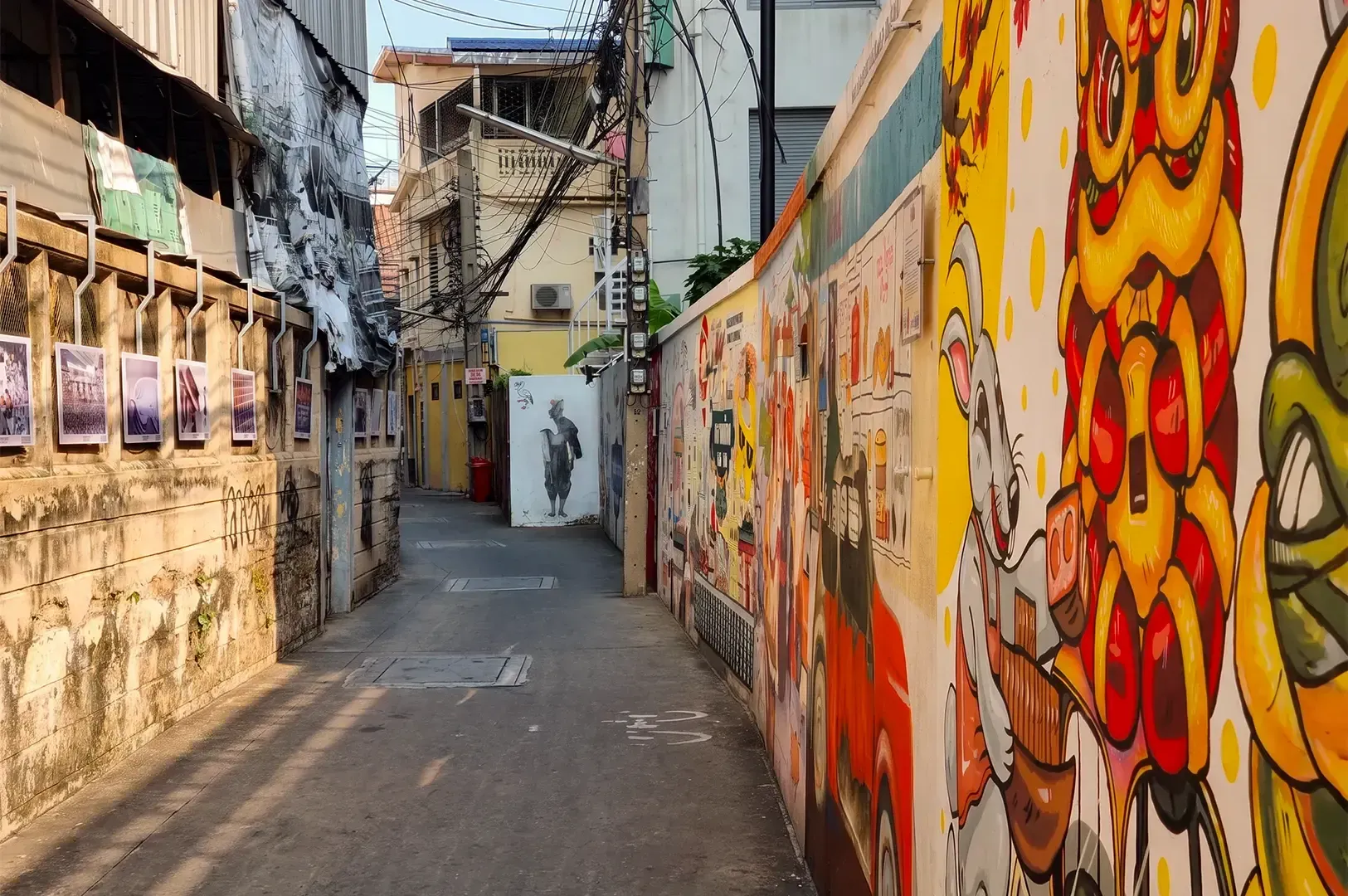
Just beside Charoen Krung sits Talat Noi, a tangle of lanes so narrow two people can barely pass.
This is Bangkok off the beaten path in its most literal sense. Old car-part workshops sit next to century-old shrines. Cats sleep on motorbike seats. Murals cover crumbling walls, painted by locals rather than for tourists.
The Art of Wandering Without a Plan
I've learned, across forty-odd destinations, that some places can only be met on foot and without an itinerary.
Talat Noi is one of them. Put the phone away. Follow the river when you can see it. Let a wrong turn become the point.
The reward is usually edible — a
kopi-style Thai coffee thick with condensed milk, or a bowl of noodles from a woman who's made nothing else her whole life. This district's roots run deep into the city's Chinese-Thai heritage, and you taste it in every corner.
Ari: Where Young Bangkok Actually Lives

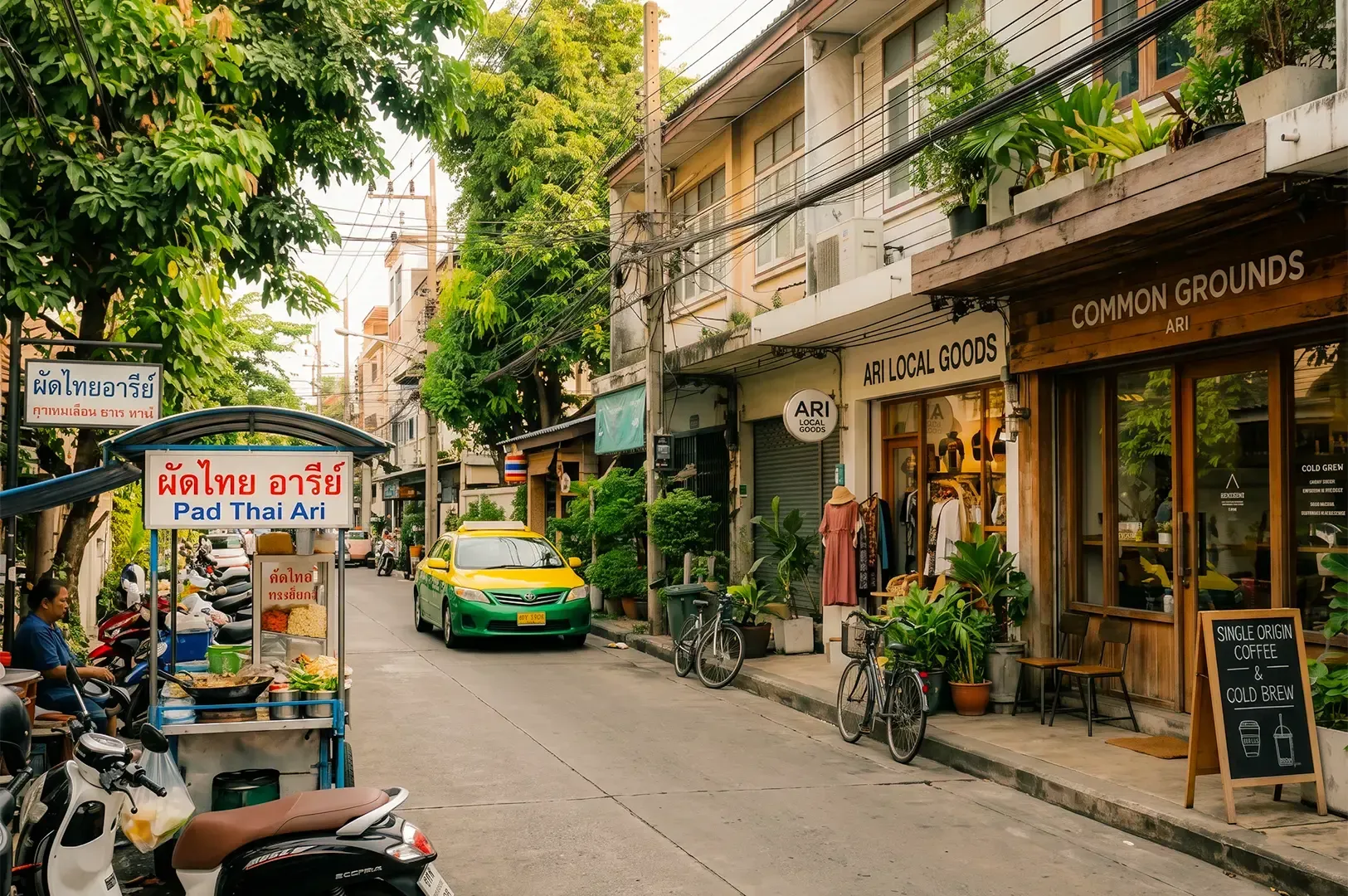
North of the tourist churn, Ari feels like a different city breathing at its own pace.
It's leafy. Residential. Full of people who live here rather than pass through. And it has quietly become one of the most interesting authentic travel destinations in Bangkok for anyone who cares about food.
A Morning in the Ari Sois
I remember a rainy Tuesday, ducking under an awning to escape the downpour, and finding a tiny café run by a couple who roast their own beans.
Rain outside. Warm cup in hand. A dog asleep by the door.
Around the corner, old-school Thai boat noodles simmered in a shop that predates every trendy spot on the street. That contrast — new and old sharing the same lane without friction — is what makes Ari special.
Practical Notes for Visiting Ari
Ari has its own BTS Skytrain station, which makes it refreshingly easy to reach. Go on a weekday morning if you can. Weekends bring more of a crowd, though it's still gentle by Bangkok standards.
Bring cash. Many of the best stalls don't take cards, and honestly, that's part of the charm.
Thonburi: The Other Side of the River

Cross the Chao Phraya and Bangkok slows down again.
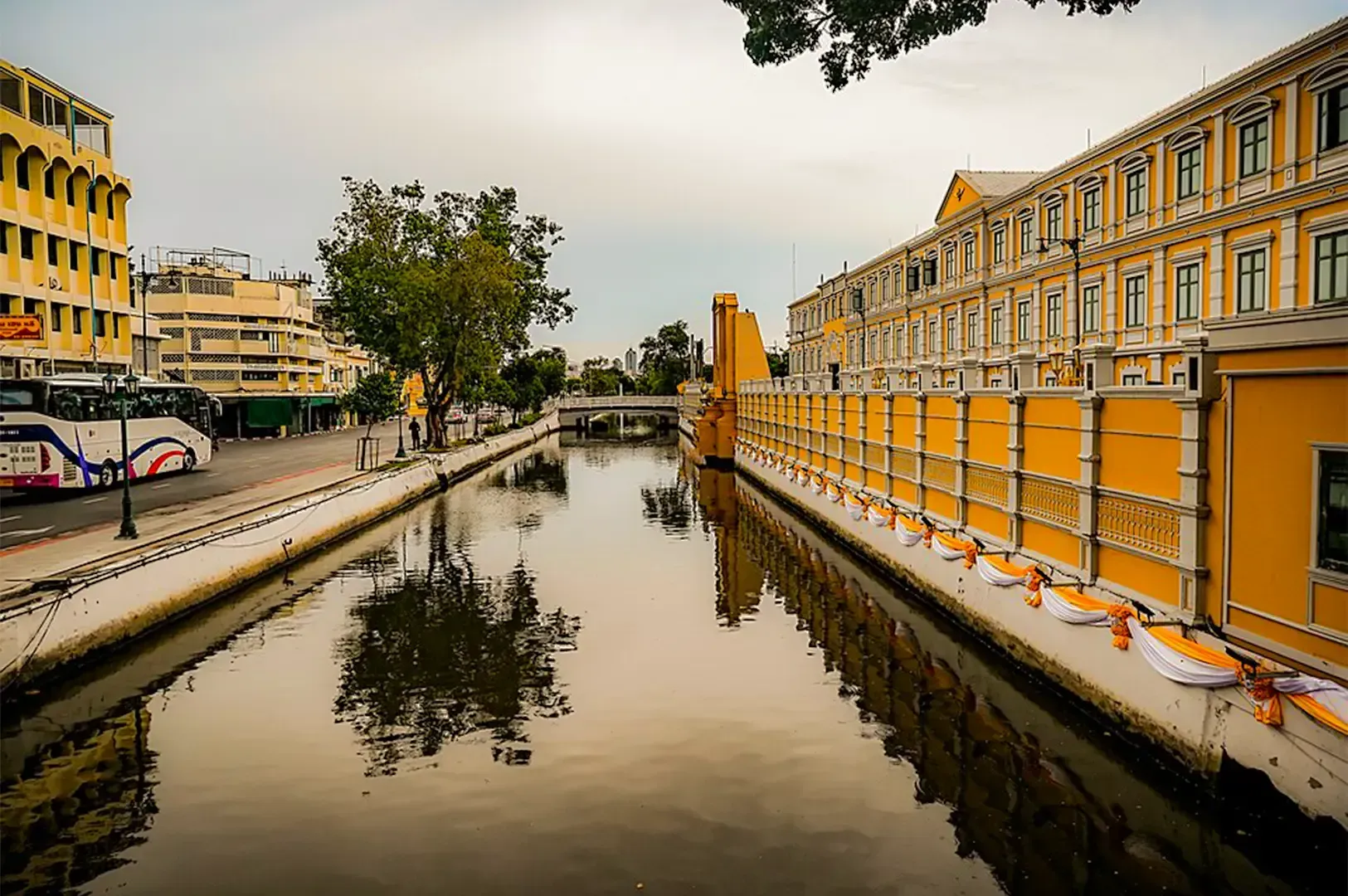
Thonburi was the capital before Bangkok proper, and it still feels like the city's older, quieter sibling. Canals thread through the neighborhoods here — the famous khlongs — and life organizes itself around the water.
Canal Life and the Rhythm of the River
I took a longtail boat through the Thonburi canals once, early, before the heat set in.
Homes on stilts. Someone brushing their teeth on a wooden porch. A monk collecting alms along the bank. A vendor paddling past with fruit stacked in her narrow boat.
Nobody was performing. It was simply morning, and I happened to be passing through it. The Chao Phraya River is the city's oldest highway, and on the Thonburi side, it still feels that way.
A Quiet Word on Respect
These are people's homes, not an attraction. I keep my voice low, my camera down more often than not, and I remember that I'm a guest passing through someone's ordinary day.
That small courtesy opens more doors than any guidebook.
Bang Rak: Faith, Flavor, and Everyday Life
Bang Rak is one of my favorite Bangkok hidden neighborhoods precisely because it refuses to be one thing.
Temples, mosques, and churches sit within walking distance of each other. Street food runs late into the night. It's dense, human, and utterly unpretentious.
Eating Your Way Through Bang Rak
Come hungry. This is one of the great eating districts, and it doesn't announce itself.
Grilled skewers. Fresh mango with sticky rice. A bowl of curry over rice, handed to you on a plastic plate at a table you share with strangers. The food carries generations of memory, and you can feel it. For a fuller picture of the city's food culture, good travel writing on Bangkok will always point you back to its streets.
How These Neighborhoods Are Changing Travel
Something is shifting in how thoughtful visitors move through Bangkok.
More travelers now skip a fourth temple for a morning in Ari. They trade a mall for a walk through Talat Noi. They choose the local district over the landmark, and they come home with something a photograph can't hold.
I've watched it happen from the service side of luxury travel — even the most well-heeled guests I've accompanied ask, eventually, for the real version. The bowl of noodles nobody Instagrams. The lane that isn't on the map.
Practical Tips for Exploring Bangkok Like a Local
A few things I've learned the slow way:
Go early. Bangkok's neighborhoods are gentlest in the morning, before the heat and the traffic take hold.
Use the trains and boats. The Skytrain and river ferries reach most of these districts and spare you the gridlock.
Eat where the locals queue. A short wait at a shophouse stall is the surest sign you've found something worth your time.
Learn a few words of Thai. A simple khob khun opens faces. People notice when you try.
What Bangkok's Quiet Districts Teach You

The grand sights show you what Bangkok wants you to see.
The residential neighborhoods show you what Bangkok actually is — a city of families and food and small, unhurried routines, still humming beneath the spectacle.
I've eaten in some of the finest rooms in the world. But the bowl of congee in that Charoen Krung lane, on an ordinary wet morning, sits closer to the heart of this city than any of them.
That's the version of Bangkok I keep returning to. Not the one that performs. The one that simply lives — and lets you, for a little while, live alongside it.
If this drew you in, you may also enjoy
Neighborhood Secrets: Local Life in Private Residences, where the quiet rhythms of a place reveal what the guidebooks never do.