The Guest Book No One Reads: What Private Residences Reveal Through Small Details

August 18, 2026 |J.C. Yue

A formal candlelit dinner party in an upscale dining room, with a waiter in a suit serving champagne to guests seated at a long wooden table.

The Joy of Discovery

The first thing I do in any private residence is open the guest book.

Not because anyone asks me to. Not because it matters to the itinerary. But because in ten years of arriving early, walking rooms before my employer does, and learning to read a place before it's fully awake, I've found that the truest character of a house lives in the details nobody thinks about.

The guest book is one of those details. It sits on a side table, leather-bound and often dusty, filled with the handwriting of strangers who stayed here before you. Most guests never touch it. But it tells you more about a private residence luxury stay than any listing photograph ever could.

Here's what I've learned, quietly, from the corners of houses across more than forty destinations.

Why the Small Details Matter More Than the Brochure

An architectural rendering of a luxury high-rise condominium complex at sunset. The beautifully landscaped grounds feature winding wooden boardwalks, serene water features, circular outdoor lounging pods, and a modern glass-walled pavilion surrounded by lush tropical greenery.

A brochure is written to impress. A house is lived in.

That gap — between how a place presents itself and how it actually holds you — is where the real story sits. The marble in the entrance tells you what someone paid for. The worn spot on the third stair tells you how the family actually moved through their days.

When you're assessing high-end private accommodation, the polished surfaces are almost beside the point. Anyone can buy those. What you're really reading is the residue of care, or its absence.


The House That Forgot to Perform

The best villa I ever prepared had a crack in one of the kitchen tiles and a kettle that whistled slightly off-key.

Nobody had rushed to fix either. And somehow that was the point — the owners lived here, loved it, and hadn't sanded down every human edge to meet a guest's expectation of perfection. A home that has stopped performing is a home you can actually rest in.


The Guest Book No One Reads

Open it, and a house begins to speak.

The entries tell you who came before. A honeymoon in the spring. A family that returned three summers running. A note in shaky handwriting thanking the owner for a quiet week after a hard year. These are the marks of a place people wanted to come back to.


What the Absence of Entries Tells You

A guest book with pages torn out, or one that stops abruptly two years ago, says something too.

I've walked into supposedly premium rentals where the last honest entry was from a guest who never returned. When a house stops collecting stories, it usually stopped being cared for around the same time. The concierge may still smile, but the guest book doesn't lie.


The Worn Armchair by the Window

Every good house has one chair that everyone secretly wants.

You can spot it immediately. The cushion is slightly flattened. The armrests are softened from years of hands. It sits, almost always, near the best light in the room — the window that catches the morning, or the corner that stays cool in the afternoon.

That chair is the house telling you where it wants you to sit. No designer placed it there for a photograph. Someone lived there, again and again, until the chair remembered them.


Reading a Room Through Its Wear

When I assess a luxury villa, the wear patterns matter as much as the finishes.

  • A path worn into a rug shows the route the family actually walked
  • A faded patch on a sofa shows where the light — and the people — gathered
  • A scuffed threshold shows a door that mattered

These are the luxury villa details no listing will mention, because they can't be styled. They can only accumulate.


The Mismatched Linen and What It Confesses

Perfect, hotel-grade matching linen sometimes worries me more than it reassures.

It can mean the place was staged for rental and nobody has ever truly slept there. But a stack of linens that don't quite match — a good set, an older set, a soft favorite that's been washed a hundred times — tells me a family used this house. They ran out. They improvised. They lived.

Mismatched linen is not a flaw. It's a fingerprint.


The Art That Was Chosen, Not Curated

There's a difference between art hung to fill a wall and art hung because someone loved it.

You feel it instantly. Curated art is safe, symmetrical, and forgettable — the kind an interior firm orders by the metre. Chosen art is uneven. A small painting of a place the owner clearly visited. A child's framed drawing that survived the redecoration. A photograph of a coastline, slightly crooked, that no one straightened because straightening it would break the spell.


Amalfi: The Villa That Kept Its Memories

A bright white Mediterranean-style villa built into a steep, rocky cliffside overlooking the ocean. The property features extensive terraced gardens, long winding staircases, vibrant pink bougainvillea, and a private blue swimming pool on a lower level.

On the Amalfi Coast, I once prepared a villa where the walls held decades of family photographs — sun-bleached, informal, gloriously imperfect.

The owners could have replaced them with tasteful abstracts before renting. They didn't. And every guest who stayed there felt they'd been let into something real, not sold a stage. The Italian tourism board can point you to the region — but it can't tell you which houses still hold their soul.


The Fridge Stocked With Someone Else's Life

Open the refrigerator in a private residence and you learn who the owner really is.

A jar of a specific local honey. An open bottle of a wine they clearly favor. A condiment you've never heard of, half-used. A stocked fridge is a quiet autobiography — the tastes of someone who was here last week and will be here again after you leave.

This is one of the strangest intimacies of a high-end private accommodation. You are living, briefly, inside someone else's preferences. The considerate owners leave a note. The great ones leave the honey and simply trust you'll understand.


What Private Rentals Reveal Across Cultures

How a house holds these small details shifts from place to place. The instinct behind them does not.

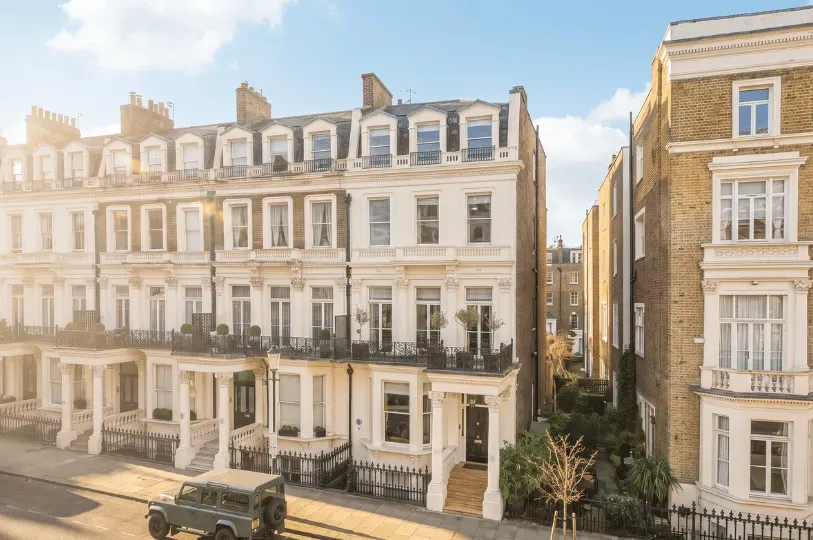
London: Restraint in the Details

A street view of classic, elegant townhouses with cream-colored stucco facades, grand entrance columns, and black wrought-iron balconies. A green off-road vehicle is parked on the street in front of the multi-story residences on a sunny day.

In London, the tells are understated and deliberate.

A townhouse rental worth its price shows itself in the small things — a well-read shelf of books that clearly belong to someone, a coat hook by the door worn smooth, radiators that hum in a rhythm the house has kept for a century. The city that invented the private members' club also perfected the art of the detail that never announces itself.

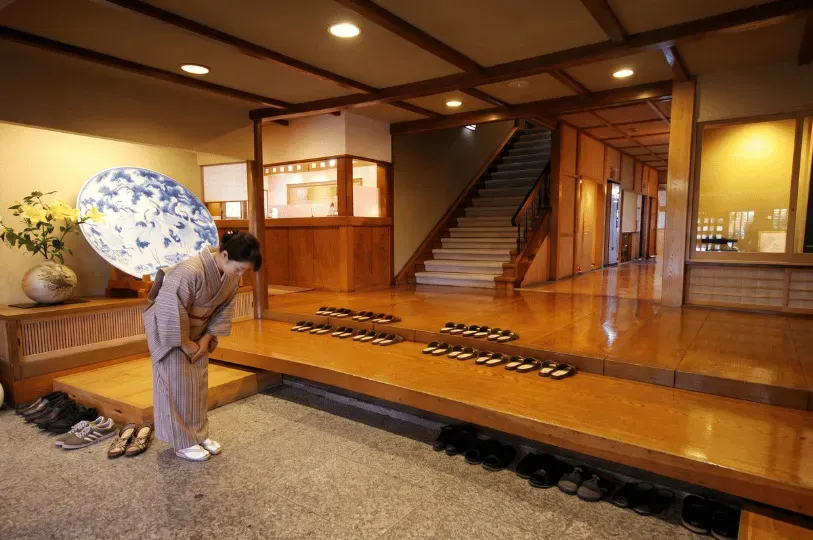
Tokyo: The Care You Almost Miss

The traditional entryway of a Japanese ryokan or residence with a polished wooden floor. A woman wearing a striped kimono bows deeply in greeting. Neatly arranged slippers sit on the raised wooden step, while outdoor shoes remain on the lower stone floor near a large decorative ceramic plate.

In Tokyo, the small details lean toward reverence.

A single flower placed in the entrance. Slippers set out in exactly the right spot. The principle of omotenashi means the care is total and nearly invisible — you feel looked after without ever seeing the hand that did it. The best Japanese residences reveal themselves through what has been quietly anticipated, not what has been displayed.

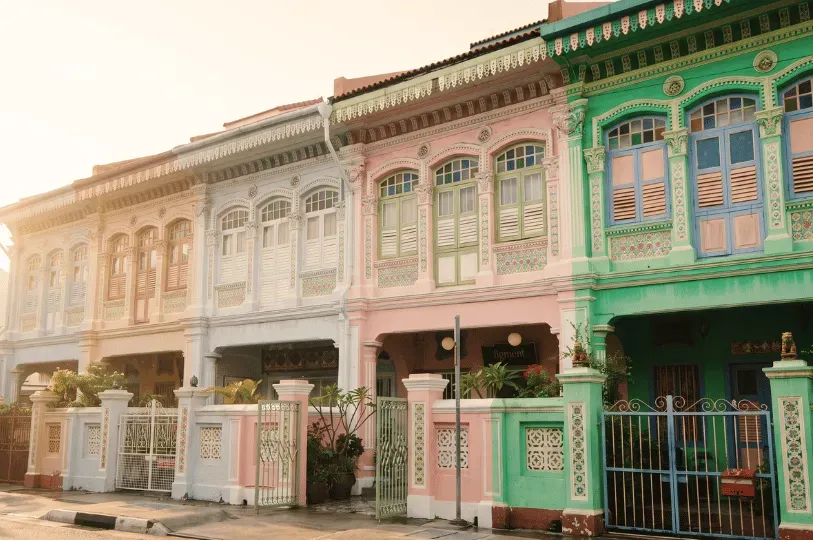
Singapore: Home Behind the Facade

A row of ornate, pastel-colored heritage shophouses in shades of light blue, pink, and vibrant green. The traditional facades are decorated with intricate ceramic tiles, carved wooden window shutters, detailed plasterwork, and decorative metal front gates.

Back home in Singapore, some of the most telling residences hide behind ordinary faces.

A restored shophouse where the family kept the original floor tiles, chips and all. A black-and-white bungalow where the ceiling fans still turn because someone loved the sound. These are the houses that chose memory over renovation — and they're the ones I trust.


The Details That Warn You

Not every small detail is comforting. Some are quiet warnings.


The Signs a House Is Only Pretending

I've learned to notice when a residence is a stage rather than a home:

  • Everything matches too perfectly — no history, no human wear
  • The books are decorative — chosen for spine color, never opened
  • Empty cupboards and a bare fridge — nobody actually lives here
  • A guest book that's suspiciously new — or missing entirely

When a place has been stripped of every human trace to look "luxurious," it usually means the luxury is the only thing on offer. A house with no memory can only ever be a very expensive box.


The Practical Insider Check

Before I approve any private residence luxury stay, I walk it the way a resident would live it.

I open the guest book. I sit in the worn chair. I check whether the kitchen has been cooked in or only cleaned. I look for the one detail the owner couldn't bring themselves to remove. That single stubborn detail is usually where the whole character of the house is hiding.


Why This Way of Seeing Matters

After enough houses, you stop being impressed by the grand gesture and start trusting the small honest one.

The UNESCO World Heritage districts are full of buildings that have held families for generations, and their power was never in their scale. It was in the accumulation of small, unstaged choices — the worn stair, the chosen painting, the linen that didn't quite match. These are the marks of a place that was loved before it was rented.

For the traveler, this is the real skill of the luxury travel insider: learning to read a house through its residue, not its brochure. The photographs will always show you the view. Only the details will show you the truth.


How to Read Your Next Private Residence

The next time you step into a villa or a townhouse that costs more per night than most people earn in a week, resist the pull of the obvious.

Don't head straight for the view. Open the guest book nobody reads. Find the chair everyone secretly wants. Look at the art and ask whether someone loved it or simply ordered it. Open the fridge and meet the owner through their tastes.

What private rentals reveal, they reveal quietly. The house that keeps its small human details — the crack, the crooked photo, the mismatched sheets — is almost always the one you'll remember long after the marble has faded from memory. That, more than any listing ever promises, is the sign of a place worth returning to.

For more on the quiet complexities of caring for homes that have held generations of stories, read The Challenges of Historic Private Residences.

Share this article

Recent Posts

A hotel room with a modern Japanese style interior.
By J.C. Yue • October 12, 2026
How luxury properties create true rest — a personal assistant on luxury sleep abroad, hotel rest experiences, and the amenities that help you sleep well.
A woman laying on a white bed on her phone with the covers slightly ruffled up, bright sunlight shin
By J.C. Yue • October 8, 2026
When every hour is accounted for, and the days blur into cities you can barely name — what does it feel like to lose your own time without noticing?
A hawker vendor preparing a meal in a container with his ingredients layed out in front.
By J.C. Yue • October 6, 2026
The local table test reveals if a restaurant truly belongs to its community — honest dining signs from 40+ destinations, from Penang to Positano and home.
A calm, peaceful residential street in Bangkok lined with buildings on either side with park vehicle
By J.C. Yue • October 5, 2026
Explore Bangkok residential neighborhoods and local districts off the beaten path — hidden neighborhoods and authentic travel through the city's quiet second side.
Two people having a conversation over cups of coffee in white mugs.
By J.C. Yue • October 1, 2026
Some souvenirs collect dust. The ones worth keeping are the conversations you never planned to have — and couldn't leave behind if you tried.
Tea cups and kettle setup placed near a window with white curtains.
By J.C. Yue • September 30, 2026
When home is never one place, rituals become the anchor. A reflection on the small, quiet habits, tea, a notebook, familiar coffee, that hold you steady across forty cities and counting.
A cozy hotel room interior with parted red curtains revealing a city view outside.
By J.C. Yue • September 29, 2026
Why the hotel floor experience shapes your luxury hotel stay. A personal assistant's luxury travel tips on choosing the best floor in a hotel.
A dimly lit chef’s table with two customers waiting as the chef prepares a meal behind the counter.
By J.C. Yue • September 28, 2026
Master chef's table etiquette when sharing an intimate dining experience with strangers — a personal assistant's guide to fine dining etiquette abroad.
A group of people in front of a coffee shop glass display choosing from the selection, a red stall e
By J.C. Yue • September 24, 2026
Forty cities. Forty sets of choices. A quiet reflection on how the smallest decisions can be the ones that cost you the most.
George Town heritage shophouses in Penang, Malaysia lined up in a busy street.
By J.C. Yue • September 22, 2026
Explore Penang travel beyond George Town's heritage streets — Penang food culture, hidden gems, and the quiet rise of luxury travel Penang.
Show More