

Melbourne Without the Map: Following the City Through Bookshops, Courtyards, and Side Doors

August 24, 2026 |J.C. Yue

The first time I found the real Melbourne, I was lost.

I'd stepped out of a meeting near Flinders Lane with forty minutes to spare and no plan for them. My employer was resting. The car wasn't due. So I did the thing I rarely allow myself to do in a working city — I put the phone away and turned down a lane because I liked the look of it.

Ten years of accompanying my employer across more than forty destinations has taught me to read cities quickly. Most give themselves up on the main road. Melbourne hides. It keeps its best rooms behind plain doors, up narrow stairs, and down lanes that look like they lead nowhere.

This is the Melbourne I've come to love — the one you can't reach with a map. Here's how I've learned to follow it.

Why the Map Fails You Here

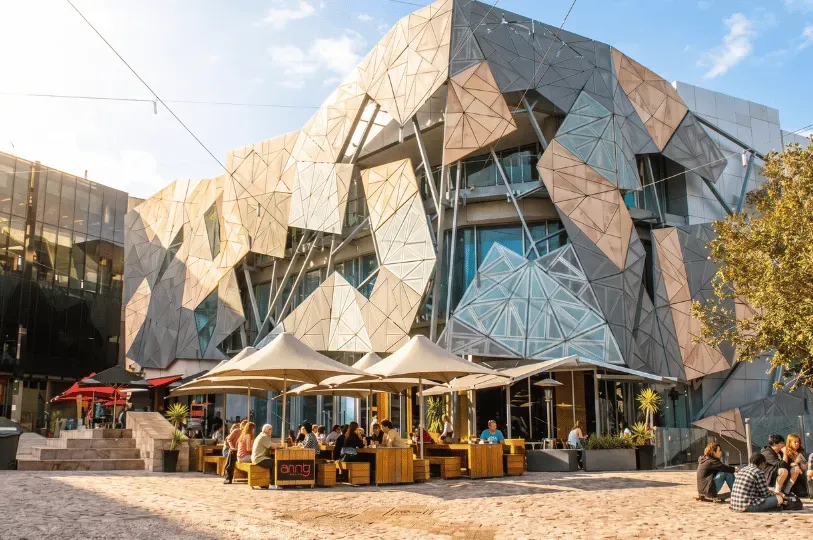
The geometric, geometric-tiled facade of the ACMI building at Federation Square in Melbourne, with outdoor cafe seating under large umbrellas filled with people relaxing in the open plaza.

A map shows you Federation Square and the river. It won't show you the bookshop with the creaking floor or the courtyard three turns off the main street.

Melbourne's character lives in the gaps. The city rewards the walker who's willing to be slightly lost, to double back, to push a door that might be locked. Its famous laneway culture grew out of exactly this — service alleys and forgotten passages that the city, over decades, quietly turned into its soul.


The Skill of Wandering With Purpose

I don't wander aimlessly. I anchor a day with one or two fixed points, then leave the space between them open.

That open space is where Melbourne happens. A resource like Visit Victoria will map the anchors well enough. The lanes between them, you have to walk yourself.

The Bookshops That Slow You Down

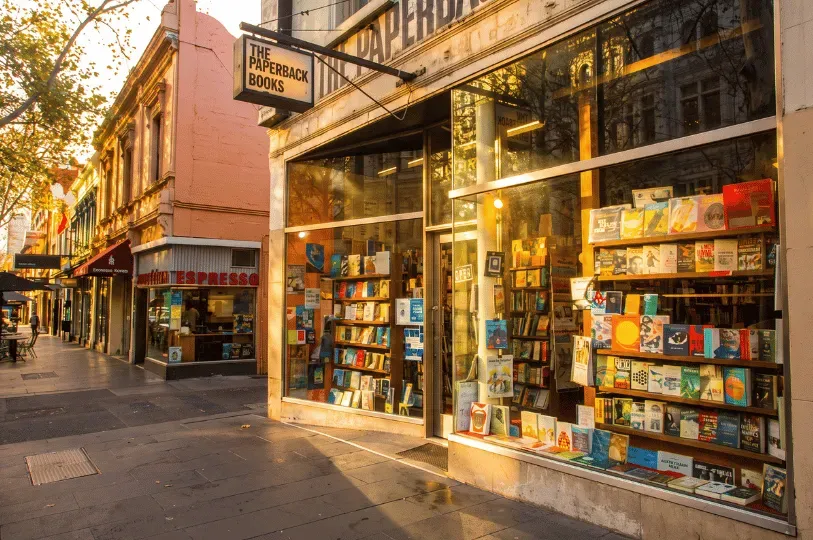
The street-level storefront of The Paperback Books on Lygon Street in Melbourne, showing glowing floor-to-ceiling glass windows filled with curated book displays during golden hour.

Melbourne is a reading city. You feel it the moment you step into one of its independent bookshops.

There's a particular quiet in these rooms — the kind that makes you lower your voice without being asked. A good bookshop is a courtyard you enter through the mind. I've spent more unplanned hours in Melbourne's bookshops than I'd ever admit to an employer expecting efficiency.


Where the Shelves Remember You

The best of them aren't grand. They're narrow, over-stocked, and staffed by someone who actually reads.

  • A shelf hand-labelled in fading ink
  • A creak in the floorboard by the poetry section
  • A cat asleep on a stack of returns
  • A clerk who knows exactly where one obscure title sits

These are the details no listing captures. The city's literary heart runs deep enough that Melbourne holds a UNESCO City of Literature standing — but you don't need the title to feel it. You feel it in the hush.


A Corner I Keep Returning To

One rainy afternoon I ducked into a second-floor shop off a lane to escape a downpour.

I wasn't looking for anything. But I left an hour later with a worn paperback and the strange sense of having been somewhere, not just passed through. Some rooms give you shelter. A few give you back to yourself.


The Courtyards Hidden in Plain Sight

Melbourne's courtyards are its best-kept secret, and they're rarely marked at all.

You find them by accident — a gap between two buildings, a passage that opens into unexpected light. A courtyard is the city exhaling. In a place this dense, these small open spaces feel like a held breath finally let go.


How to Spot a Courtyard Worth Finding

Look for the signs the guidebooks skip:

  • A narrow opening with worn paving, suggesting decades of foot traffic
  • A hint of green — a fig tree, a climbing vine — over a wall
  • The sound of cutlery or quiet conversation drifting out
  • A hand-painted sign, or no sign at all

The City of Melbourne has protected many of these pockets precisely because they give the centre its human scale. They're not attractions. They're places to sit.

Laneway Culture Beyond the Street Art

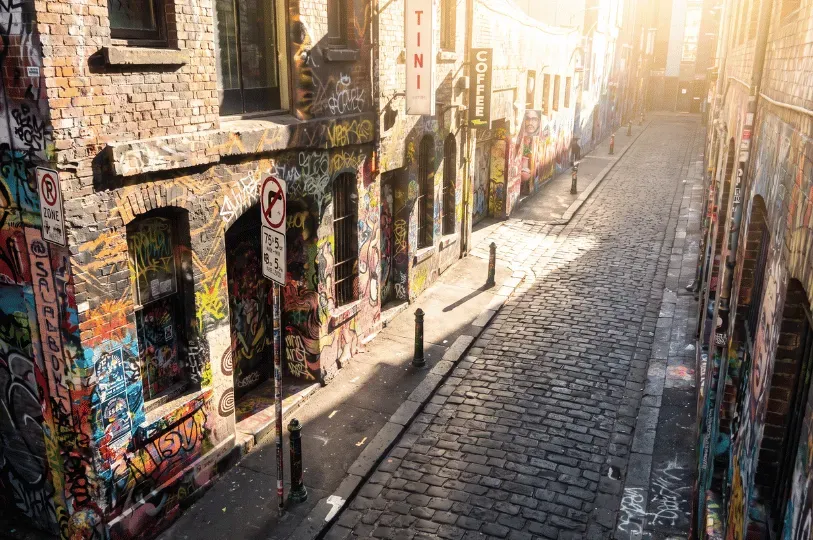
An elevated perspective looking down a cobbled Melbourne laneway, featuring brick walls covered in vibrant street art and graffiti under warm, streaming sunlight.

Everyone photographs the murals. Fewer people stay long enough to understand the lanes.

The street art is the surface. The culture is what happens beneath it. The coffee counter the size of a cupboard. The record shop you'd miss if you blinked. The wine bar behind a door with no name.


The Coffee That Started It All

Melbourne's coffee obsession isn't marketing. It's genuine, and it lives in the lanes.

I've had better flat whites from a six-seat laneway counter than from any hotel in the city. The barista didn't announce anything. He just made it well, slid it across, and went back to his machine. The wider story of this ritual is well told through Tourism Australia — but the cup in your hand tells it better.


Reading a Lane the Right Way

Walk slowly. Look up at the second floors, where the quietest places hide. Follow the locals who turn down a passage without hesitation — they know something.

The lane won't advertise. You have to learn its grammar.

The Side Doors Nobody Announces

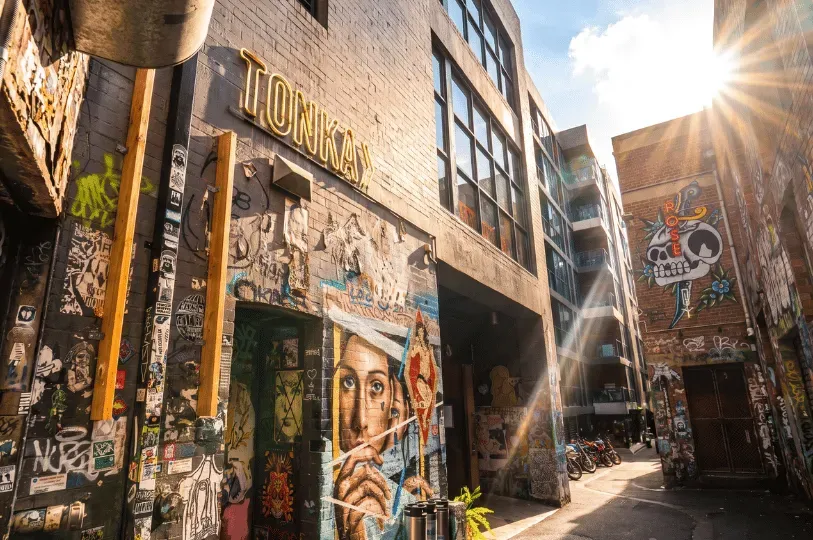
A sunlit view of Duckboard Place in Melbourne, featuring a wall with graffiti art, a yellow neon sign for Tonka restaurant, and a skull-and-rose mural illuminated by a bright sun flare.

This is the part of Melbourne I love most. The unmarked side door.

A door with no sign, a small light, a handle worn smooth by people who were told, quietly, where to go. A door that doesn't announce itself is a door that trusts you to find it.


Behind the Plain Door

Melbourne's finest small bars and dining rooms often hide behind exactly these entrances. No queue managed for show. No name in neon.

The Michelin Guide has begun recognising the city's kitchens, and a few of the ones I trust most sit behind doors you'd walk past a hundred times. That anonymity isn't shyness. It's confidence that has nothing left to prove.


How I Find Them

The best lead I ever got was from a bartender, written on a napkin after his own shift.

Pro tip: ask someone who works in the industry where they drink on their night off. Not the famous room — the small one they return to. That answer is worth more than any list.


Neighbourhoods That Reward the Unhurried

Step beyond the centre and Melbourne opens further. Each neighbourhood keeps its own quiet.


Fitzroy and the Slow Morning

Fitzroy wears its history on worn brick and faded shopfronts. On a grey morning, the crowds thin and the neighbourhood returns to its residents.

You duck into a bookshop. You wait out the drizzle over a long black. You're not rushing anywhere, and the street seems glad of it.


Carlton and the Older City

Carlton, with its Victorian terraces and the leafy calm near the Royal Exhibition Building, moves at a gentler pace.

This is where the city keeps its memory. The old cafés, the tree-lined streets, the sense of a place that was here long before the towers.

The Weather That Reveals the City

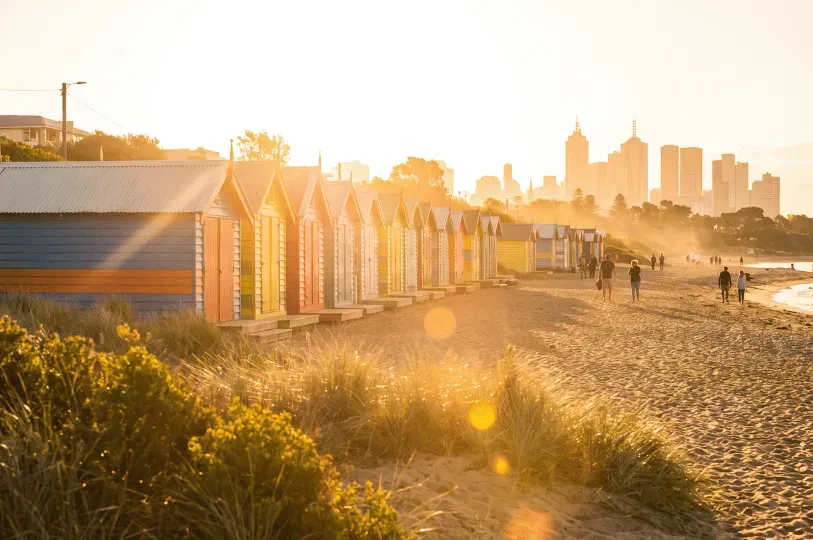
A row of colorful wooden bathing boxes along Brighton Beach at sunset, with golden light sweeping across the sand and the distant Melbourne city skyline visible in the background.

Melbourne is famous for four seasons in a day. Locals don't fight this. They read it.

Rain here isn't a day lost. It's the city softened. The lanes empty of tourists. The bookshops fill with people waiting it out. A courtyard after a shower smells of wet stone and something growing.

I've come to prefer the grey days. They slow the city just enough to let you feel what's underneath the surface.


An Insider's Approach to a Map-Free Day

Here's how I'd actually plan it, if you can call it planning.


Build Loose, Not Fixed

Choose one anchor — a gallery, a long lunch, a single neighbourhood. Then leave the rest open.

The anchor gives the day shape. The wandering gives it soul.


Follow Curiosity, Not the List

Turn down the lane that looks interesting. Push the door that might be locked. Sit in the courtyard you stumbled into.

The National Gallery of Victoria makes a fine anchor — cool, quiet, and endless — but the memory you carry home will likely come from the unplanned hour after.


Keep One Meal Unbooked

Leave at least one meal with no reservation. That's the one you stumble into — the counter behind the plain door, the noodle shop down the lane.

Some meals you plan. The ones that stay with you, you find.


What Melbourne Taught Me About Looking

After forty destinations, I've stopped measuring a city by what I saw. I measure it by what I let myself find.

Melbourne gives its best to the unhurried. The bookshop that slowed me down. The courtyard I turned into by accident. The side door a stranger pointed me toward, and the quiet room behind it that asked nothing of me except that I pay attention.

The map shows you the city. The lanes show you its heart.

So when you come, resist the urge to fill every hour. Put the phone away for forty minutes. Turn down the lane you like the look of. Push the plain door. Somewhere behind it, the real Melbourne is waiting — the one that was never on the map at all.

Where would you let yourself get lost first?

For more on decoding this city's hidden network of lanes and unmarked doors, read The Melbourne Laneway Code: The Hidden Network.

Share this article

Recent Posts

A hotel room with a modern Japanese style interior.
By J.C. Yue • October 12, 2026
How luxury properties create true rest — a personal assistant on luxury sleep abroad, hotel rest experiences, and the amenities that help you sleep well.

A woman laying on a white bed on her phone with the covers slightly ruffled up, bright sunlight shin
By J.C. Yue • October 8, 2026
When every hour is accounted for, and the days blur into cities you can barely name — what does it feel like to lose your own time without noticing?

A hawker vendor preparing a meal in a container with his ingredients layed out in front.
By J.C. Yue • October 6, 2026
The local table test reveals if a restaurant truly belongs to its community — honest dining signs from 40+ destinations, from Penang to Positano and home.

A calm, peaceful residential street in Bangkok lined with buildings on either side with park vehicle
By J.C. Yue • October 5, 2026
Explore Bangkok residential neighborhoods and local districts off the beaten path — hidden neighborhoods and authentic travel through the city's quiet second side.

Two people having a conversation over cups of coffee in white mugs.
By J.C. Yue • October 1, 2026
Some souvenirs collect dust. The ones worth keeping are the conversations you never planned to have — and couldn't leave behind if you tried.

Tea cups and kettle setup placed near a window with white curtains.
By J.C. Yue • September 30, 2026
When home is never one place, rituals become the anchor. A reflection on the small, quiet habits, tea, a notebook, familiar coffee, that hold you steady across forty cities and counting.

A cozy hotel room interior with parted red curtains revealing a city view outside.
By J.C. Yue • September 29, 2026
Why the hotel floor experience shapes your luxury hotel stay. A personal assistant's luxury travel tips on choosing the best floor in a hotel.

A dimly lit chef’s table with two customers waiting as the chef prepares a meal behind the counter.
By J.C. Yue • September 28, 2026
Master chef's table etiquette when sharing an intimate dining experience with strangers — a personal assistant's guide to fine dining etiquette abroad.

A group of people in front of a coffee shop glass display choosing from the selection, a red stall e
By J.C. Yue • September 24, 2026
Forty cities. Forty sets of choices. A quiet reflection on how the smallest decisions can be the ones that cost you the most.

George Town heritage shophouses in Penang, Malaysia lined up in a busy street.
By J.C. Yue • September 22, 2026
Explore Penang travel beyond George Town's heritage streets — Penang food culture, hidden gems, and the quiet rise of luxury travel Penang.

Show More