Dubai Before Sunrise: The Quieter Rituals Behind a City Built for Spectacle

September 1, 2026 |J.C. Yue

The first time I saw Dubai without its noise, I was standing on a hotel balcony at 4:40 in the morning, unable to sleep.

Jet lag, mostly. My employer was resting. The city below was dark, save for the highways threading orange light between the towers. And then, from somewhere I couldn't place, the first call to prayer rose over all of it — the adhan, unhurried and clear, floating above a skyline built to impress.

For a moment, the most engineered city I know went quiet.

After a decade of accompanying my employer across more than forty destinations, I've learned that most cities show you their true face in the hours before they wake. Dubai before sunrise is nothing like the Dubai of the brochures. It's slower. Softer. Almost tender. And it's the version I've come to love most.


Why the Pre-Dawn Hours Matter Here

Dubai is a city that performs. The fountains, the towers, the malls that never seem to end — all of it is built to be seen, and seen impressively.

But spectacle is exhausting to keep up. And like anyone who performs for a living, the city has to rest sometime.

That rest happens between roughly 3 and 6 a.m. — the window when the crowds are gone, the traffic thins to almost nothing, and the real, human rhythm of the place quietly reveals itself.


The City That Forgets to Impress You

In those hours, no one is trying to sell you anything.

The valet stands alone by the empty motor court. The lobby, usually a river of arrivals, holds two people and the hum of a floor polisher. This is the city with its guard down — and it tells you more in an hour than the daytime does in a week.

The Call to Prayer Over an Empty Skyline

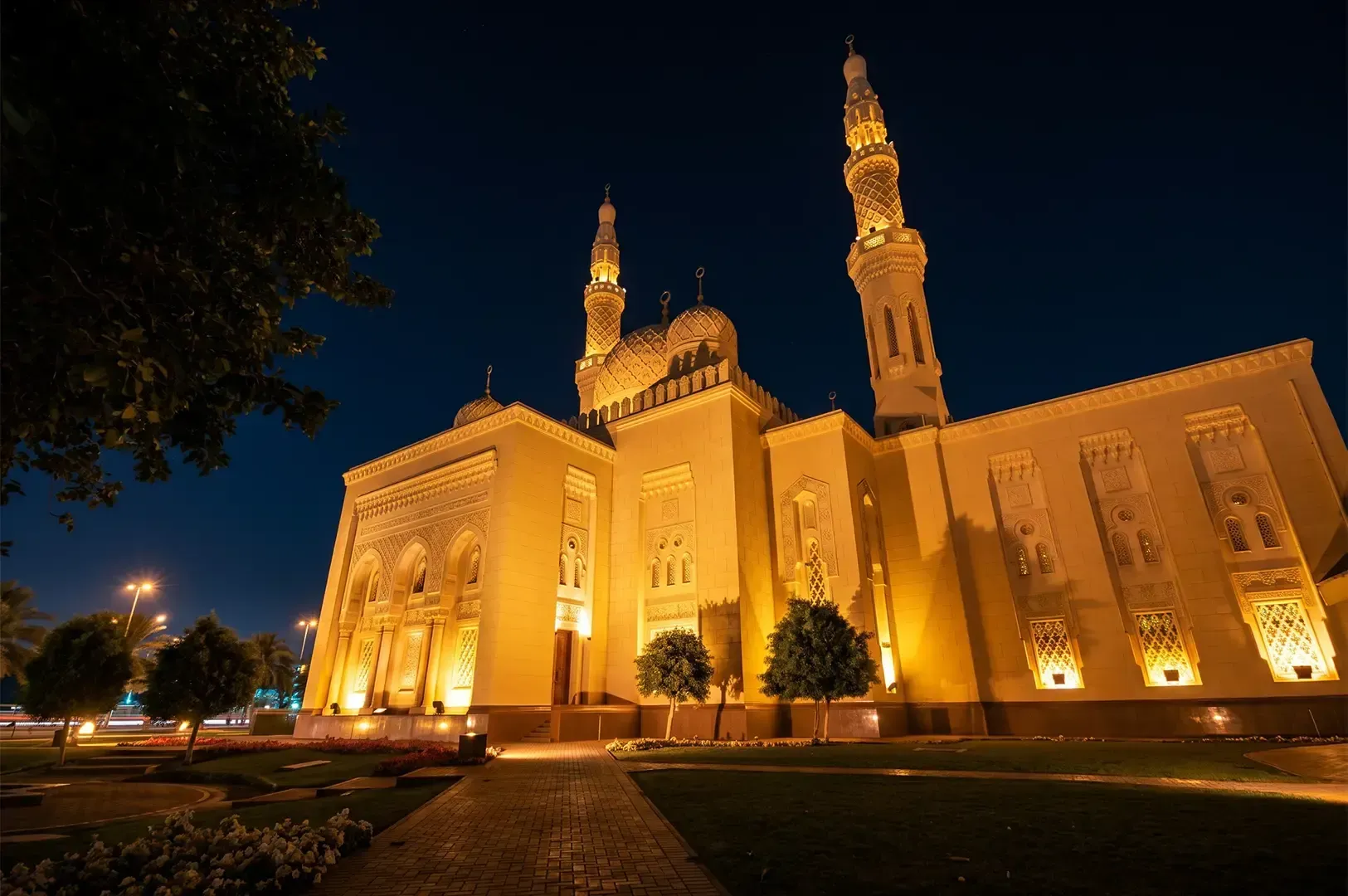
Famous religious spot Jumeriah Mosque in Dubai lit by its yellow warm lights and surrounded by greenery under a dawn sky.

Nothing shapes the early morning here like the sound of the mosques.

The adhan reaches you before the light does. It moves across the districts in a loose, overlapping wave — one mosque beginning as another finishes, the sound folding over itself across the whole city.


A Rhythm Older Than the Towers

There's something I find deeply moving about it. All that glass and steel, all that ambition — and underneath it, a call that has kept the same rhythm for centuries.

The towers are new. The Islamic tradition of prayer that orders the day is not. The spectacle sits on top of something far older and quieter, and the pre-dawn hour is when you can finally hear it.

I've stood at the window for the whole of it more than once, coffee cooling in my hand, doing nothing but listening. It's the closest this city ever comes to stillness.

Empty Highways and the Strange Calm of Scale

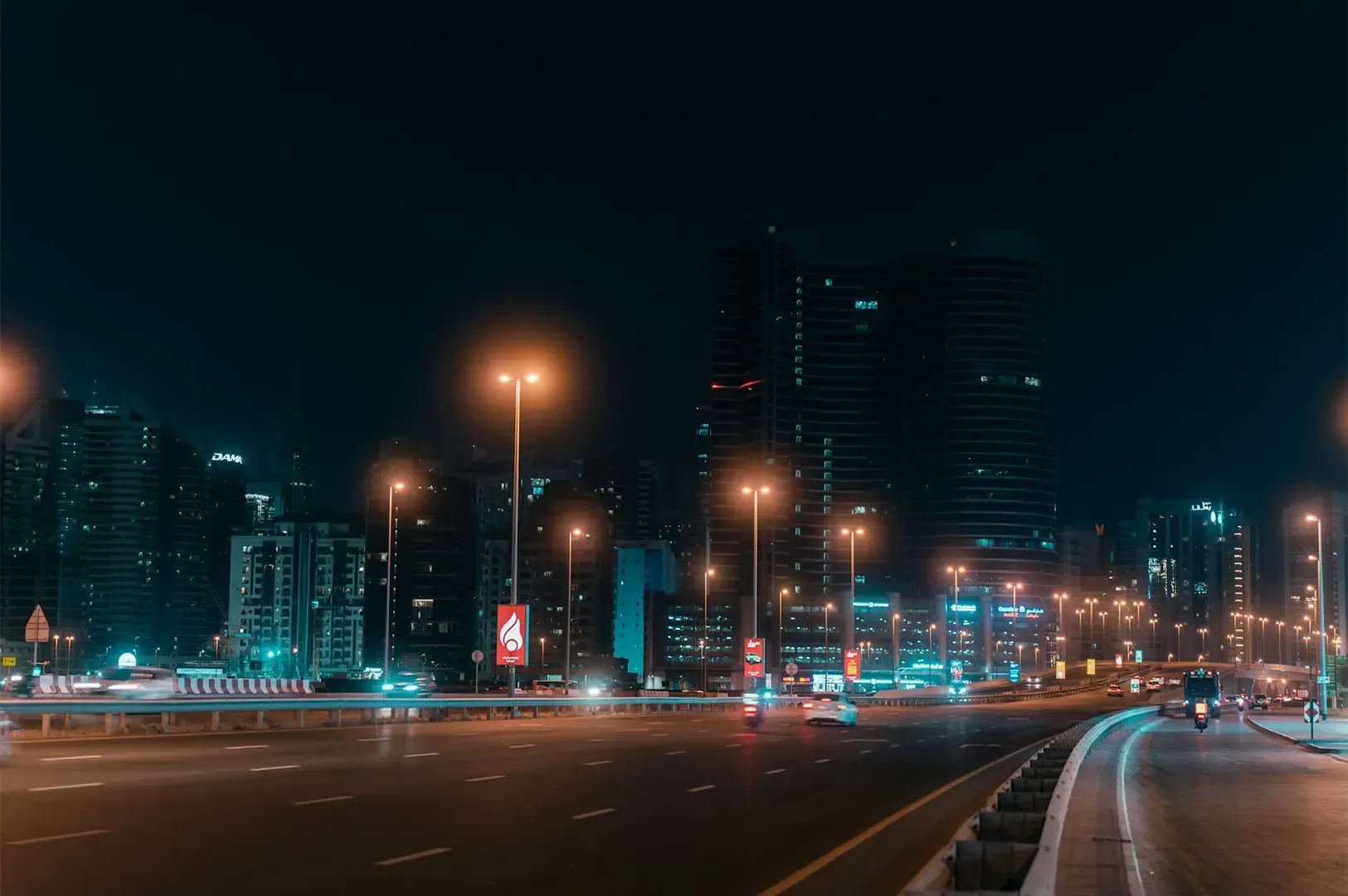
Dubai highways with a few cars and motorcycle driving along the road lit by warm street lights under a night sky with the city at the background.

Dubai's roads are built for a city in a hurry. Twelve lanes. Interchanges like knots of light. During the day they roar.

Before sunrise, they're nearly empty — and that emptiness changes how the whole place feels.


The Drive Nobody Talks About

Some of my quietest moments here have been in the back of a car at 5 a.m., heading to an early airport transfer.

Sheikh Zayed Road, usually a wall of traffic, opens up into a long, silent ribbon. The towers slide past, lit but lifeless. The scale that overwhelms by day becomes strangely peaceful in the dark — grand, hushed, almost lunar.

Dubai travel tips rarely mention this, but if you ever have an early transfer, don't dread it. Watch the window. That drive is one of the most beautiful things the city offers, and no one's selling tickets to it.

Hotel Lobbies Before the Crowds

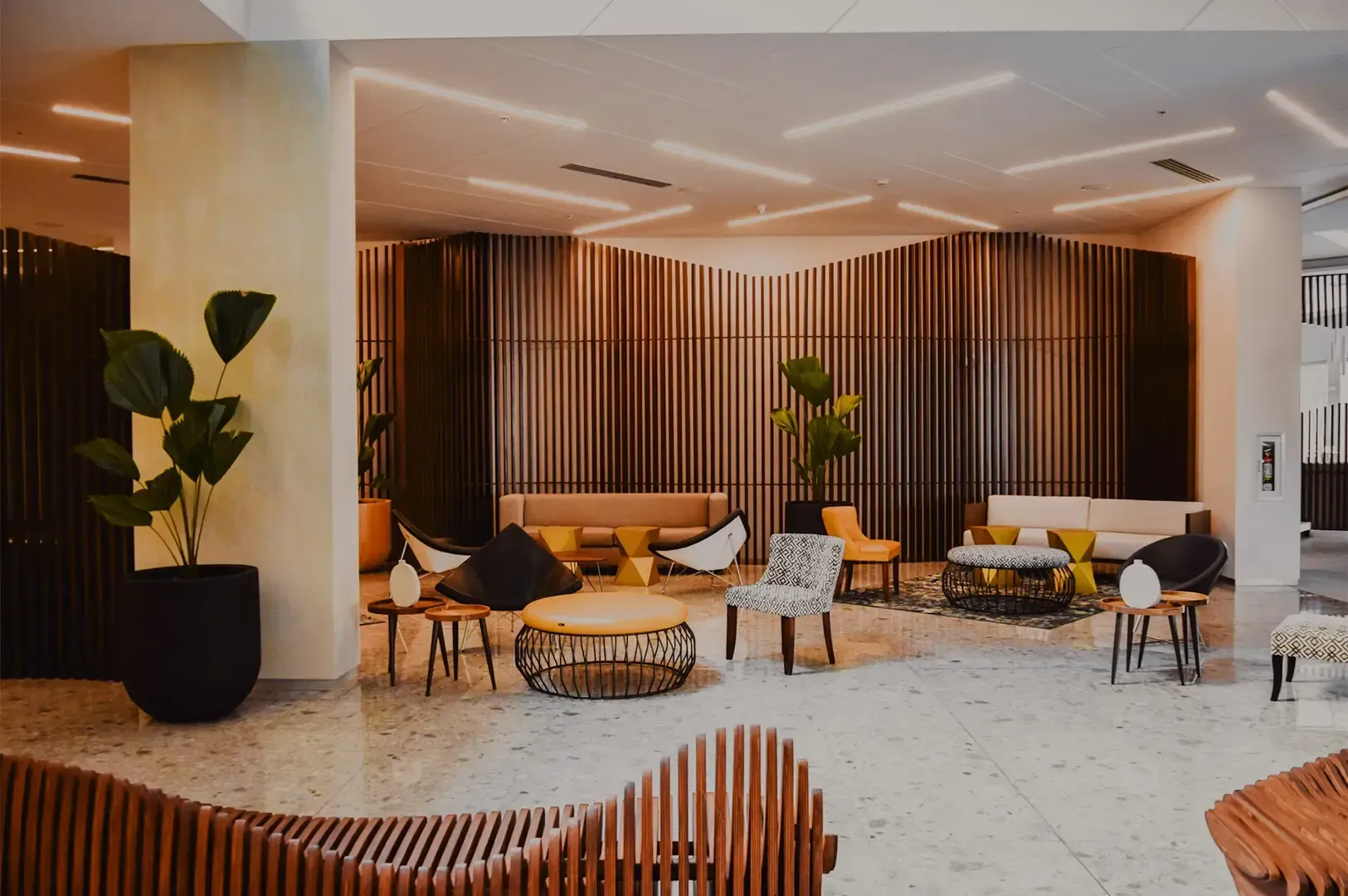
An empty and peaceful hotel lobby illuminated by cozy warm lights with tables, chairs, and couches around.

I've spent more time in Dubai hotel lobbies than almost anywhere, and I've learned they have two entirely different personalities.

By day, they perform. By dawn, they breathe.


The Staff Who Own the Quiet

Arrive in a great lobby at 5 a.m. and you meet the people who actually hold the place together — the night manager finishing a shift, the barista setting up, the cleaner moving through the marble like they have all the time in the world.

The service here can be extraordinary when no one's watching. I've been quietly handed a coffee I didn't ask for, by someone who simply noticed I was up early and looked tired. That unprompted kindness is the real luxury — not the chandelier overhead.

The finest properties, the kind the Forbes Travel Guide recognises, train for exactly this hour, when there's no audience to impress and only a single guest to care for.


Dubai Luxury Travel, Stripped Bare

This is where Dubai luxury travel shows its true quality.

Anyone can look impressive at 8 p.m. with the lights up and the lobby full. It's harder to be excellent at dawn, with one guest and no one watching. The hotels that manage it are the ones I trust — and the ones I quietly recommend to anyone who asks.

The Souks at First Light

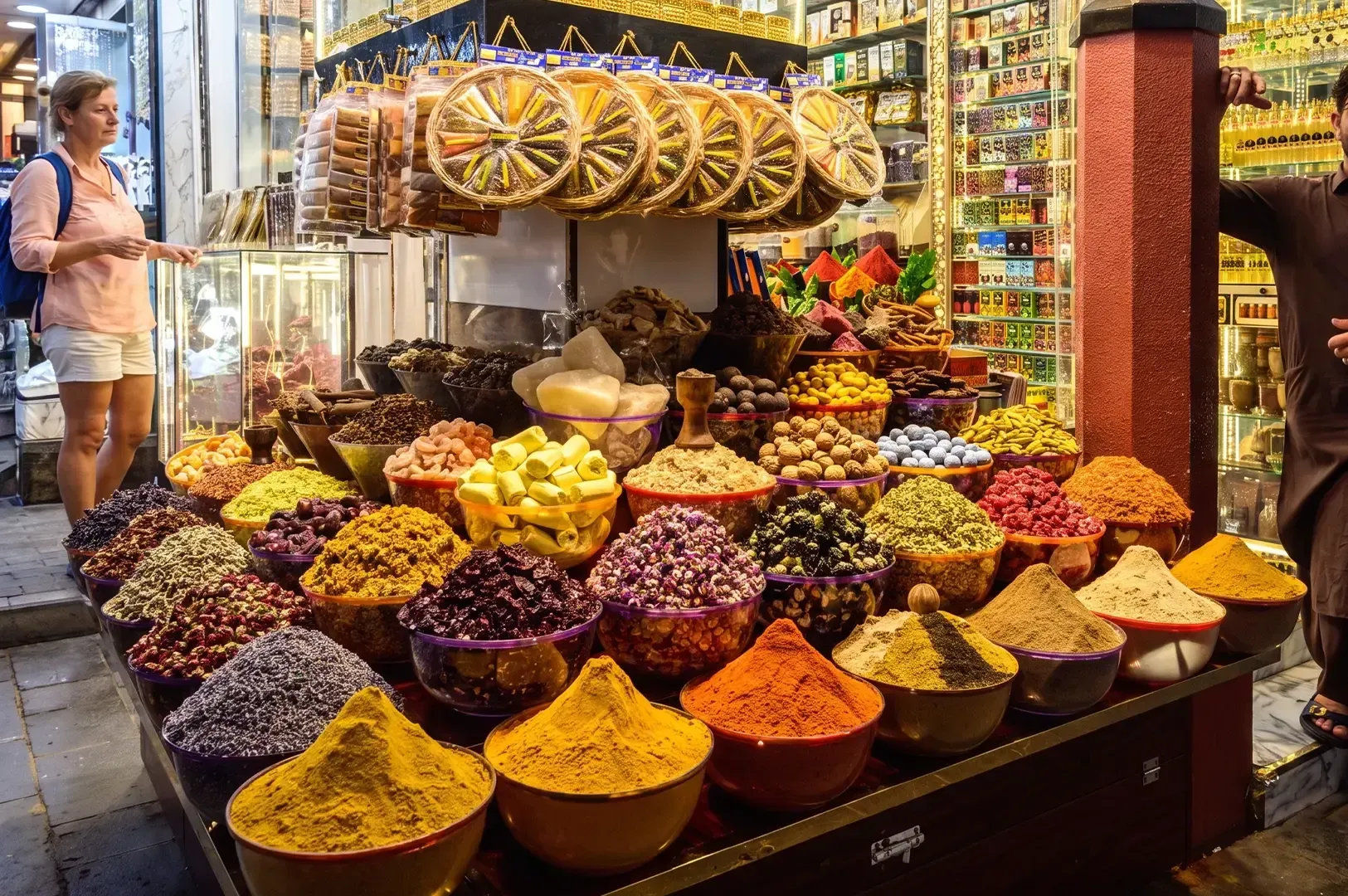
A vendor in a Dubai souk selling Turmeric, Cumin, Chili, and other spices laid out in bowls in front of the stall.

If you want to find quiet Dubai, go to the old souks before the traders fully open.

Down in Deira, along the creek, the city keeps a memory of what it was before the towers. The Gold Souk and the spice lanes near it were the heart of the old trading port, and in the early light they belong to the shopkeepers, not the tourists.


The City Before the Performance

I love walking there before the crowds arrive.

The traders roll up their shutters slowly. Someone sweeps a step that's already clean. The smell of cardamom and oud drifts out before the first customer does. An old man pours tea for no one in particular, just because it's morning and that's what you do.

None of it is staged. For an hour, the souk is a working neighbourhood again, not an attraction — and that hour is worth more than any mall.


Crossing the Creek the Old Way

Take an abra — the small wooden water taxi — across Dubai Creek at dawn, and you'll pay a coin to sit low on the water while the city wakes on both banks.

It costs almost nothing. It's the oldest way to cross, and in the early light, it's the loveliest. This is the Dubai the postcards skip — the one that remembers it was a fishing and pearling town long before it was a skyline.

The Desert Light That Changes Everything

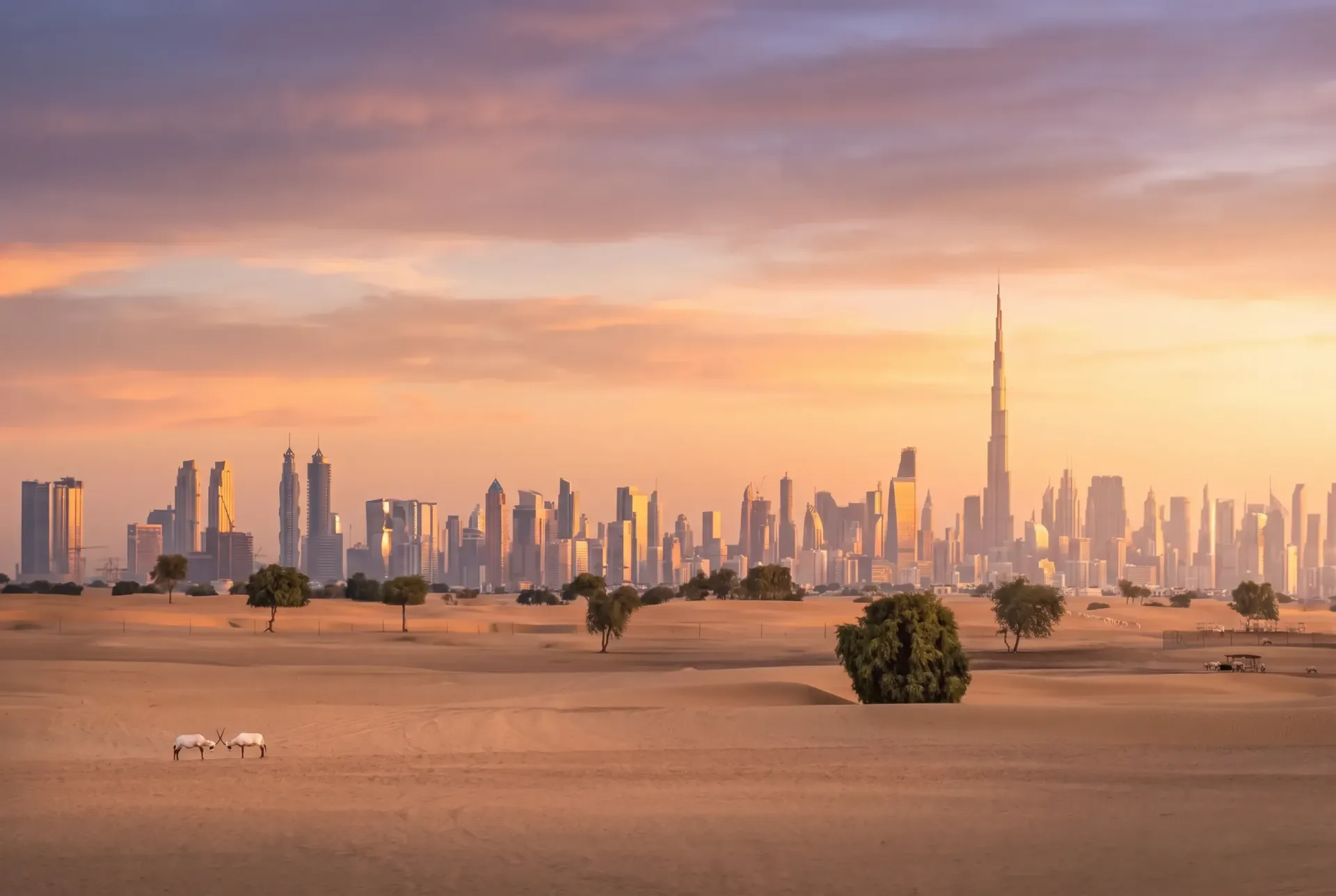
The Arabian Desert during dawn with golden light mixed in the light blue sky with Dubai in the horizon.

Just beyond the city, the desert does something at sunrise that no amount of engineering can match.


When the Sand Turns Gold

The light comes in low and warm, and for a few minutes the dunes hold a colour that doesn't last — a soft, deep amber that fades as the sun lifts and the heat takes over.

I've stood at the edge of the Arabian Desert at dawn while my employer slept off a late flight, and felt the whole restless energy of the city fall away behind me. Out there, the spectacle finally stops. There's nothing to impress you but the light, and it doesn't need to try.

The official Visit Dubai resources will point you to the dune tours. But you don't need a tour for this. You need to be somewhere open, facing east, before the sun clears the horizon.


The Dubai Hidden Side Locals Keep

There's a version of this city that residents know and visitors rarely reach. The Dubai hidden side isn't hidden by design — it's just quieter than the parts built to shout.


Morning Karak and the Working City

Long before the cafés open, the karak stalls are already busy.

Karak — strong, sweet, spiced tea — is the drink of the working city, served in small paper cups to taxi drivers and labourers and anyone up early enough to want one. I've had better mornings over a one-dirham karak at a roadside stall than at any grand breakfast buffet.

The stall doesn't perform. It just pours. And in that small, honest exchange, you meet the real Dubai — the one built by the people who are awake before everyone else.


The Neighbourhoods That Wake Slowly

Away from the towers, older districts like Al Fahidi keep low, wind-towered houses and narrow lanes that hold the cool of the night into the morning.

Walk them early and you'll find the city the UNESCO heritage lists were made to protect — the human-scaled Dubai that existed long before the record-breaking began. The lanes are quiet. The walls are thick. The neighbourhood hasn't forgotten what it was.


What the Quiet Hours Taught Me

After enough early mornings here, I stopped measuring Dubai by its superlatives.

I stopped counting the tallest, the biggest, the most. Those things impress once. What stayed with me were the quiet things — the adhan over a dark skyline, the empty highway, the trader's first pot of tea, the desert going gold for a few minutes before the heat took over.


The Cup I Still Remember

It was a Tuesday, before dawn, waiting on an early transfer that ran late.

I ducked into a roadside stall for karak, more for something to do than out of hunger. The man handed over the paper cup without a word, steam rising off it into the cool morning air. A few taxi drivers stood nearby, saying little. My phone, for once, stayed in my pocket.

I've had lavish breakfasts in this city that took real arranging. That one-dirham cup, in the dark, is the one I'd go back for. The tea said everything the towers never could.


Spectacle Is the Setting. Stillness Is the Gift.

Dubai will always be a city built to be seen. That's its nature, and there's a real thrill in it.

But the spectacle is only the surface. Underneath it runs something calmer and far more human — and you can only reach it in the hours before the city remembers to perform.


How to Find the Quieter Dubai

If you're planning a trip, don't spend all your energy on the daytime show. Leave room for the early hours.

  • Set an alarm for the adhan at least once — listen to the whole of it from a high window
  • Take an early transfer as a gift, not a chore, and watch the empty highways
  • Reach the souks at opening, before the tour groups arrive
  • Cross the creek by abra at dawn for the price of a coin
  • Stand facing the desert at sunrise, somewhere open and quiet
  • Drink your first karak at a roadside stall, not a hotel

Do these, and you'll meet a Dubai most visitors fly home without ever seeing. The Michelin Guide can lead you to the grand tables, and they're worth it — but the quiet cup at dawn is the one that lingers.

Come for the spectacle, by all means. Just wake before it does. Somewhere in that early stillness — between the call to prayer and the first gold light on the sand — the real city is waiting, quietly, for anyone willing to rise and meet it.

For a closer look at what lies beneath this city's glittering surface, read Beyond the Burj: The Reality of Dubai Luxury.

Share this article

Recent Posts

A hotel room with a modern Japanese style interior.
By J.C. Yue • October 12, 2026
How luxury properties create true rest — a personal assistant on luxury sleep abroad, hotel rest experiences, and the amenities that help you sleep well.
A woman laying on a white bed on her phone with the covers slightly ruffled up, bright sunlight shin
By J.C. Yue • October 8, 2026
When every hour is accounted for, and the days blur into cities you can barely name — what does it feel like to lose your own time without noticing?
A hawker vendor preparing a meal in a container with his ingredients layed out in front.
By J.C. Yue • October 6, 2026
The local table test reveals if a restaurant truly belongs to its community — honest dining signs from 40+ destinations, from Penang to Positano and home.
A calm, peaceful residential street in Bangkok lined with buildings on either side with park vehicle
By J.C. Yue • October 5, 2026
Explore Bangkok residential neighborhoods and local districts off the beaten path — hidden neighborhoods and authentic travel through the city's quiet second side.
Two people having a conversation over cups of coffee in white mugs.
By J.C. Yue • October 1, 2026
Some souvenirs collect dust. The ones worth keeping are the conversations you never planned to have — and couldn't leave behind if you tried.
Tea cups and kettle setup placed near a window with white curtains.
By J.C. Yue • September 30, 2026
When home is never one place, rituals become the anchor. A reflection on the small, quiet habits, tea, a notebook, familiar coffee, that hold you steady across forty cities and counting.
A cozy hotel room interior with parted red curtains revealing a city view outside.
By J.C. Yue • September 29, 2026
Why the hotel floor experience shapes your luxury hotel stay. A personal assistant's luxury travel tips on choosing the best floor in a hotel.
A dimly lit chef’s table with two customers waiting as the chef prepares a meal behind the counter.
By J.C. Yue • September 28, 2026
Master chef's table etiquette when sharing an intimate dining experience with strangers — a personal assistant's guide to fine dining etiquette abroad.
A group of people in front of a coffee shop glass display choosing from the selection, a red stall e
By J.C. Yue • September 24, 2026
Forty cities. Forty sets of choices. A quiet reflection on how the smallest decisions can be the ones that cost you the most.
George Town heritage shophouses in Penang, Malaysia lined up in a busy street.
By J.C. Yue • September 22, 2026
Explore Penang travel beyond George Town's heritage streets — Penang food culture, hidden gems, and the quiet rise of luxury travel Penang.
Show More