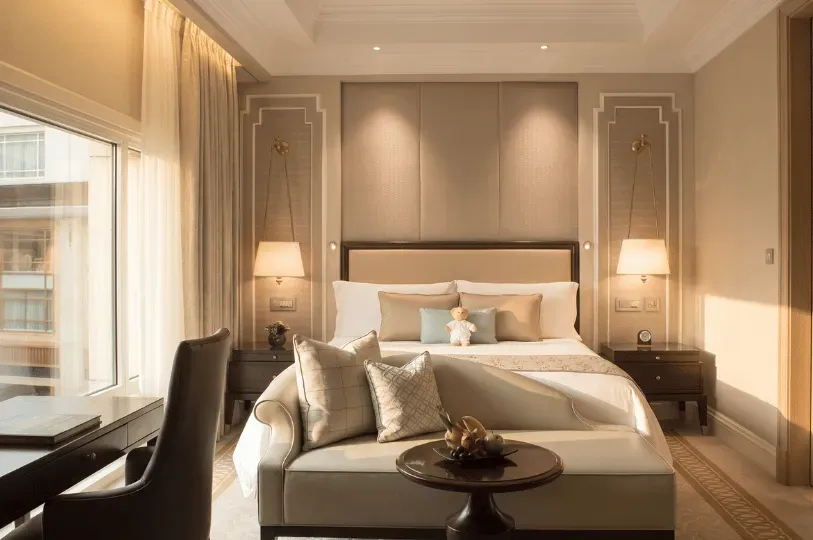
The Room You Actually Live In: Why Layout Matters More Than Square Footage
August 10, 2026 |J.C. Yue
The largest suite I ever vetted was a disappointment.
It was in a city I won't name, on a high floor with a wraparound view. On paper it was staggering — the kind of number that impresses when you say it out loud. But when I walked it the afternoon before my employer arrived, something felt off.
The desk faced a wall. The bed looked out at a bathroom door. The seating was marooned in the middle of nowhere, too far from a lamp to read by. All that space, and nowhere it actually wanted you to be.
That was the day I stopped trusting square footage.
After a decade of arriving early and walking rooms across more than forty destinations, I've learned that the hotel room layout — not the size — decides whether a stay feels like rest or like camping in an expensive box. The best rooms understand something simple. You don't live in the whole room. You live in a few key spots. And how those spots connect is everything.
Why Size Is the Wrong Question
We're trained to ask the wrong thing. How big is the suite? How many square metres?
Size tells you almost nothing about how a room feels to occupy. A generous
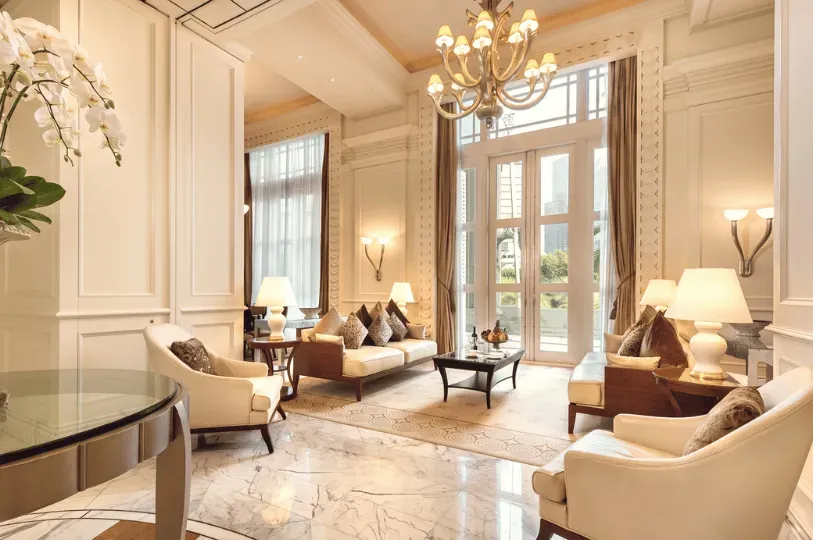
luxury hotel suite can leave you cold, while a tight room in an old European building can hold you like a good coat. The difference is never the floor area. It's the arrangement.
What "Living In a Room" Actually Means

Think about the rooms you've genuinely loved. You didn't roam them. You settled.
You found the chair by the window. The corner of the bed where the light was good. The spot at the desk where your shoulders relaxed.
We inhabit rooms in fragments, not in totals. A great
hotel room design knows this and builds those fragments with care, then connects them so moving between them feels natural rather than like crossing a car park.
The Flow Between Zones

The first thing I check now isn't the size. It's the flow.
A well-designed room has clear zones — sleep, work, wash, sit — and they hand off to each other without friction. You wake, you move to the light, you sit, you work, you wash. The room should carry you through the day the way a good host guides you through a house.
When Zones Collide
The worst rooms blur these boundaries. The desk that doubles as a luggage rack. The armchair wedged so close to the bed it becomes a laundry pile by day two.
I once vetted a room where the only comfortable seat faced directly into the open wardrobe. My employer would have spent every morning looking at their own hanging shirts. Small thing. But small things, repeated daily, are what make a room quietly exhausting.
Common mistake: travelers book by the headline number and never picture the actual path they'll walk from bed to bathroom at 3 a.m. That path matters more than the view.
The Test I Use
Before I approve a room, I walk it as if it were an ordinary Tuesday. Wake up. Reach for water. Move to work. Take a call. Get ready.
If any of those movements feel awkward — a tight squeeze, a badly placed cord, a light switch a full room away from the bed — I flag it.
The luxury travel experience is built from these unglamorous mechanics, not the marble.
Where the Light Falls

Nothing shapes a room like light, and nothing is more often ignored.
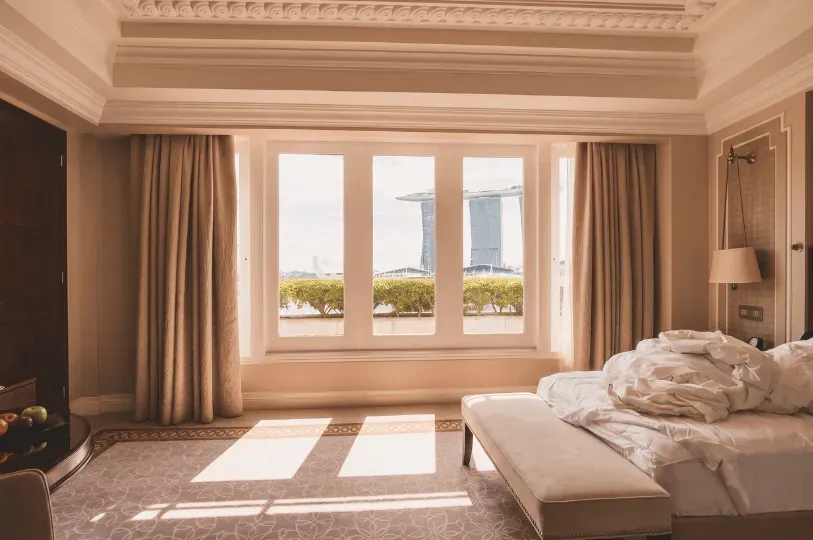
Natural light is not a bonus. It's structural. Where the windows sit, and where the furniture sits in relation to them, determines whether a room feels alive or embalmed.
Chasing the Morning
The best rooms put you near light without pinning you in it. A reading chair angled toward a window. A desk that catches morning sun without the glare that forces the blinds down by ten.
I've noticed the finest properties treat light almost the way the Japanese principle of wabi-sabi treats imperfection — as something to work with, not conquer. In a well-considered Kyoto room, the shoji screens don't block the light. They soften it, spreading a low, even glow across the space.
The Artificial Layer
When the sun goes, layout still rules. A room lit by a single overhead fixture is a room nobody wants to sit in.
Pro tip: count the light sources before you settle in. A room with three or four pools of warm, separate light — a bedside lamp, a desk lamp, a floor lamp by the chair — will always feel more generous than a large room lit like an office. If a suite has only harsh ceiling light, ask housekeeping for a standing lamp. Most good hotels have spares.
The Desk Nobody Thinks About Until They Need It

For anyone who works while traveling, desk placement is the quiet make-or-break of a room.
A desk shoved into a dark corner, facing a blank wall, tells you the designer never imagined anyone actually using it. And yet I've spent countless hours at hotel desks, prepping schedules and confirming arrangements while my employer slept.
What a Good Desk Position Looks Like
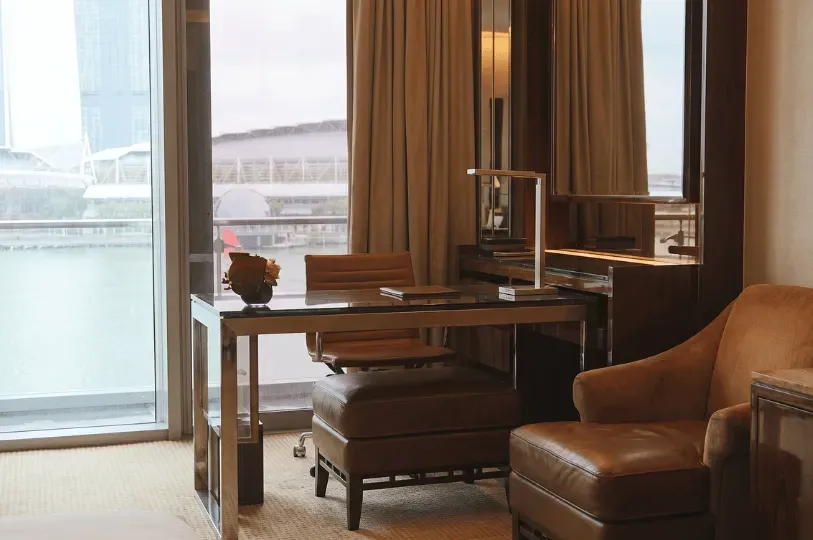
The best desks sit near a window, or at least catch some daylight. They face into the room, not the wall, so you don't feel boxed in. There's a real chair — not a decorative one that punishes your back after twenty minutes.
The Forbes Travel Guide standards reward these functional details precisely because they separate a room that photographs well from one that lives well. A room that respects the person working in it respects the person resting in it, too.
The Cord Problem
Here's an unglamorous truth. Power outlets, or the lack of them near the desk and bed, ruin more stays than bad views ever could.
I carry a small extension lead everywhere for exactly this reason.
The number of luxury suites with a single reachable outlet is genuinely surprising — a reminder that price and thoughtfulness don't always travel together.
The Bed and Where It Faces

The bed is the heart of the room, and where it points is a decision most guests never consciously notice — but always feel.
The View From the Pillow
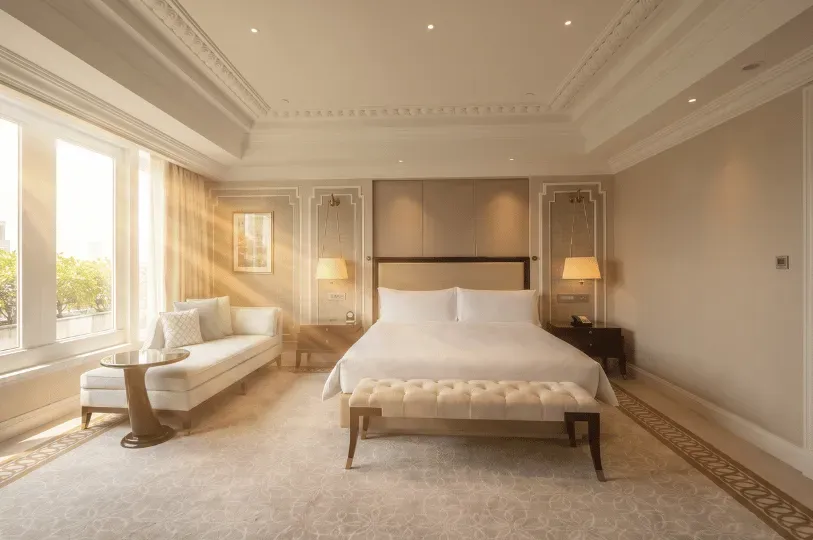
A well-placed bed faces something worth waking to. A window. A soft wall. A considered piece of art.
A poorly placed one faces a television bolted at an odd height, or worse, straight into the bathroom. I've walked into rooms where the first thing you'd see each morning was the toilet through an open door. No amount of thread count fixes that first impression.
Sound and Distance
Layout also governs quiet. A bed pushed against the corridor wall picks up every trolley and every late arrival. A bed tucked into the room's inner core, away from the door, gives you the silence that real rest needs.
When I vet rooms in a busy city, I check what sits on the other side of the headboard wall. A lift shaft or an ice machine is a quiet dealbreaker.
The Bath Versus Shower Decision
Few layout choices reveal a designer's priorities more clearly than the bathroom.
When the Tub Earns Its Space
A freestanding tub is beautiful. It's also a serious claim on floor area — and in a compact room, that claim can starve the rest of the space.
The properties that get it right make the tub a genuine experience: placed by a window, with a view, with room to move around it. In a traditional ryokan, a hinoki cypress bath is the entire point of the room, and the layout bends around it. The Japan National Tourism Organization captures how central that bathing ritual is to the whole stay.
When the Shower Wins
But in a city room where you arrive late and leave early, an enormous tub you'll never fill is dead space. A generous walk-in shower, well drained, well lit, serves the traveler far better.
Pro tip: for a working trip, choose the room with the better shower over the room with the grander tub. You'll use one every day and the other, honestly, never.
Why Small Rooms Sometimes Win
Some of the most comfortable rooms I've ever prepared were small. And some of the most awkward were vast.
The Generous Compact Room
A compact room done well feels like a well-packed suitcase — everything in its place, nothing wasted. Old European hotels are masters of this. A room in a converted Parisian building might be tight, but the bed faces the light, the desk fits neatly by the window, and every step makes sense.
UNESCO World Heritage districts are full of these buildings, where centuries-old constraints forced a kind of spatial honesty. The rooms can't sprawl, so they're arranged with real intelligence instead.
The Awkward Large Room
The oversized room fails in the opposite way. Furniture floats. Zones drift apart. You cross an expanse of carpet to reach a chair that sits too far from any lamp to be useful.
Space without arrangement is just distance. A room can be enormous and still leave you with nowhere good to sit. The Michelin Guide hotel selections increasingly reward this understanding — recognizing that considered design beats raw scale.
The Cultural Fingerprint of Layout
How a room is arranged says a great deal about where you are.
East and West at the Threshold
Japanese rooms often build in a genkan-like sense of transition — a clear line between the outside world and the sanctuary within. Space is treated as something to be felt, not filled.
Western luxury tends to lead with the statement piece: the grand bed, the sweeping view. Neither is wrong. But the rooms that stay with me borrow from both — a considered threshold, a generous bed, and light that knows where to fall. These are the travel accommodation tips no brochure prints, because they can't be photographed. They can only be lived.
What I Look For Now
After forty destinations, my checklist has almost nothing to do with size.
I look at where the light lands. Whether the desk wants to be used. Where the bed faces and what sits behind it. Whether the path from sleep to shower makes sense at 3 a.m. Whether there's a good chair near a good lamp.
A great room isn't the one that impresses when you walk in. It's the one you forget to notice, because it simply works. That, more than any square-metre figure, is the real measure of a place worth returning to.
The next time you book, stop asking how big the room is. Ask how it's arranged. Ask where you'll actually sit, work, and sleep. Because you never live in all that space. You only live in the parts that were designed with you in mind.
For more on the quiet details that separate a truly considered stay from a merely expensive one, read
Overlooked Amenities That Define True Luxury Accommodations.