Tokyo Between Appointments: The Art of Leaving Space in a City That Rewards Precision

August 11, 2026 |J.C. Yue

The train arrived at 9:14. Not 9:15. Not 9:13.

I remember checking my watch on the platform that first winter, the way you check something you don't quite believe. In Tokyo, time is kept like a promise.

After a decade of accompanying my employer across more than forty destinations, I've learned that most cities run on approximation. Tokyo does not. It runs on precision so quiet it feels like breathing.

And yet the thing I've come to love most about this city isn't its precision at all.

It's the space between it.

Why Precision Makes the Gaps Matter More

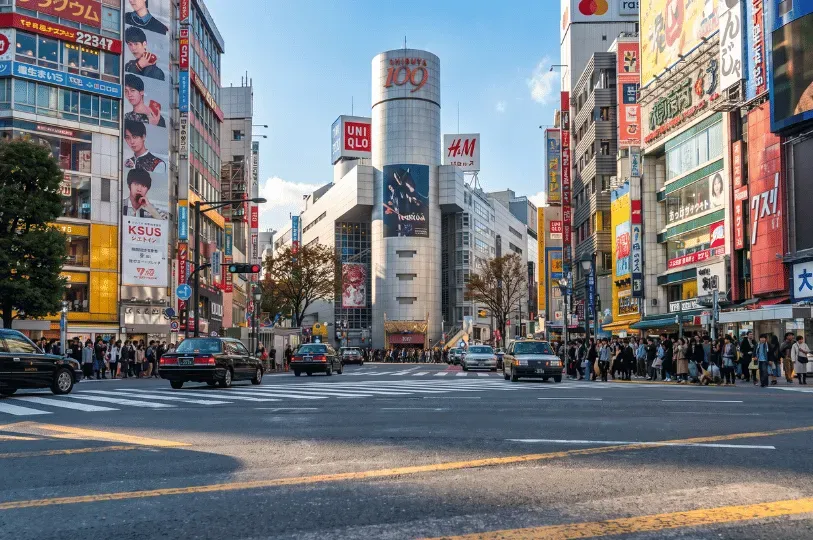
A bustling daytime view of a busy Tokyo intersection, featuring crowds of pedestrians waiting at a crosswalk, passing taxis, and tall buildings covered in colorful advertisements, anchored by the cylindrical Shibuya 109 building.

Tokyo is a city built for people who plan. The trains, the reservations, the seating charts at counters with eight stools — everything assumes you know exactly where you'll be and when.

For years, I planned my employer's days here down to the minute. A morning meeting in Marunouchi. A car at 11:40. Lunch held at a counter in Ginza. It worked. It always works, because the city meets you halfway with its own discipline.

But somewhere around my fourth or fifth trip, I noticed something. The moments that stayed with us were never the ones on the schedule. They were the gaps. The forty minutes we hadn't accounted for. The wrong turn that became the right one.


The Trap of the Perfect Itinerary

When you're managing a demanding Tokyo itinerary, the instinct is to fill it. Every hour justified. Every transition timed.

I fell into that trap early. I built days so tight there was no room to breathe, and I called it efficiency. What it actually was, I see now, was fear — the fear of an empty half-hour, of not having an answer ready.

The city that rewards precision also punishes the over-scheduled. You move so fast you never actually arrive anywhere.

The Discipline of Leaving Space

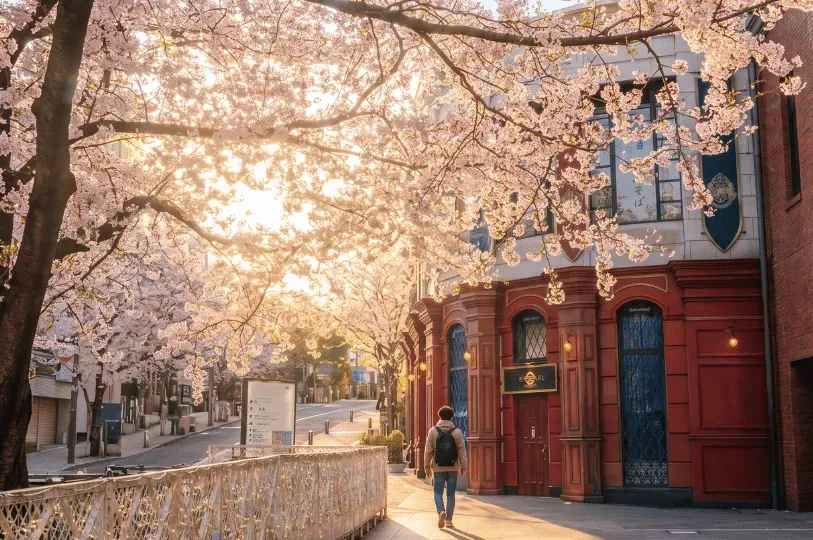
A lone pedestrian with a backpack walks down a peaceful, sun-drenched street lined with cherry blossom trees in full bloom, passing a distinct red and grey building under a golden, hazy light.

The hardest Tokyo travel tips I ever learned wasn't about where to go. It was about deliberately choosing not to go anywhere at all.

Now, when I build a day here, I leave gaps on purpose. A ninety-minute window with nothing in it. Not a backup plan. Not a soft reservation. Just space.


Why an Empty Hour Is the Real Luxury

In luxury travel Tokyo, people assume the indulgence is the suite, the car, the counter that took months to book. It isn't.

The real luxury is the unscheduled hour. The permission to stand on a bridge in Nihonbashi and watch the water without a reason. My employer, who answers emails within the minute everywhere else, once spent a full forty minutes doing nothing but watching a tea master pour, because we'd left the afternoon open.

That's what money can't schedule. You have to leave the room for it yourself.


How I Learned to Stop Filling the Calendar

It took a missed connection to teach me. A meeting ended early, the car wasn't due for an hour, and instead of rushing to fill the time, I let it sit.

We walked. No destination. We found a small stationery shop, then a bakery, then a quiet shrine tucked between two office towers. None of it was planned. All of it is what we still talk about.

The Neighborhoods That Reward the Unhurried

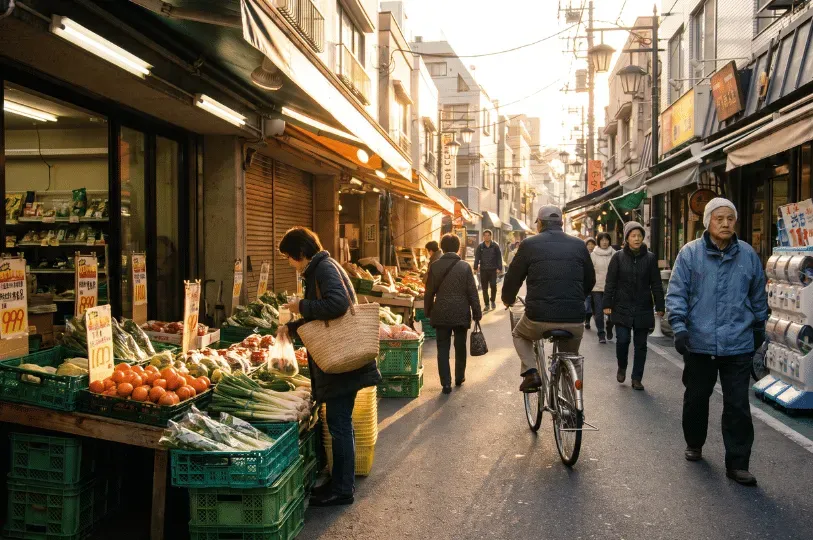
A lively local street scene bathed in warm sunlight, showing residents walking and riding bicycles past a neighborhood grocer displaying fresh vegetables and produce in stacked green crates.

The best things to do in Tokyo rarely announce themselves. They wait in the gaps for people slow enough to notice.

Yanaka: The Tokyo That Time Left Alone

Most visitors never reach Yanaka, and that's precisely its gift.

The old wooden houses survived the war and the developers both. The pace drops the moment you step off the main road. Cats sleep on doorsteps. An old woman sweeps a path that's already clean. I've sent guests here on their free mornings, and they always come back quieter than they left.

This is where the city keeps its memory.


Kagurazaka and the Slope of Small Discoveries

The cobbled slopes of Kagurazaka hide some of Tokyo's most unhurried corners.

Narrow lanes branch off the main hill into pockets of stillness — a tea house, a shrine, a restaurant with no sign at all. You don't find these on a schedule. You find them because you had an hour and no plan, and you let your feet decide.


The Backstreets Behind the Famous Names

Some of Tokyo's finest hidden gems sit one street behind its loudest attractions.

Step off the crush of Shibuya, walk two blocks in any direction, and the noise falls away. A tiny coffee counter. A record shop the size of a closet. The city is generous to anyone willing to turn the corner nobody else turns.

Omotenashi and the Rhythm You Don't Control

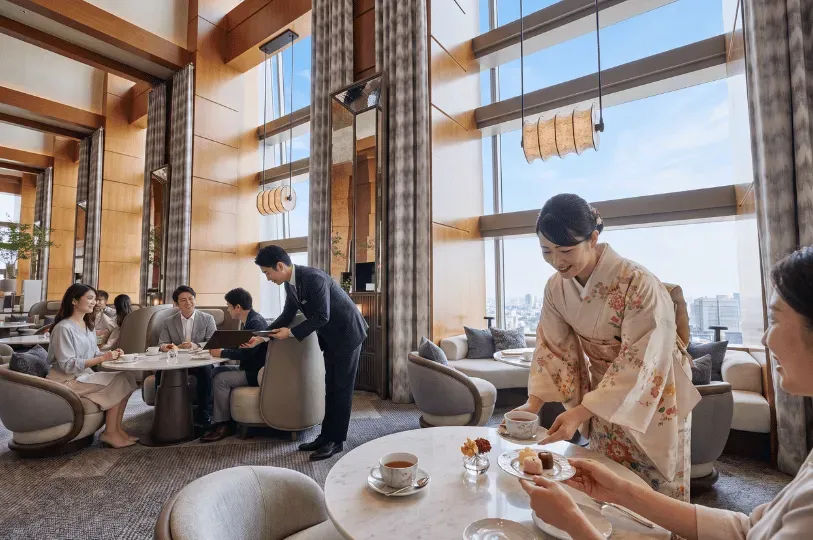
A bright, high-ceilinged luxury hotel lounge with expansive city views, where a smiling server in a traditional floral kimono serves tea and pastries to a guest, while a suited staff member assists another table in the background.

To understand why space matters so much here, you have to understand omotenashi — the Japanese philosophy of anticipatory, wholehearted hospitality.


Service That Reads the Room

In Tokyo, the best service happens in the pauses. The staff who sense you need a moment and give it. The counter chef who reads your pace and slows his own.

I've watched this hundreds of times from my position slightly to the side. The care here lives in what isn't rushed. A meal at a great counter can't be hurried, and it shouldn't be. The chef sets the rhythm, and your only job is to leave enough space in your day to receive it.


Why Over-Booking Insults the Experience

When guests cram a tasting menu between two appointments, they lose it entirely. The whole point of omakase is to surrender the clock.

I've learned to build a buffer around every important meal here. Not because I'm worried about running late — but because the experience deserves an unhurried exit as much as an unhurried arrival.


The Practical Art of the Unscheduled Day

Leaving space sounds simple. In a city this precise, it takes real discipline. Here's what I've learned about doing it well.


Anchor the Day, Then Let Go

I never leave a day entirely open — that's not freedom, that's drift.

I anchor it with one or two fixed points, then leave the connective time deliberately empty. A morning at the Nezu Museum, then nothing until evening. The anchors give the day shape. The gaps give it soul.


Let the Trains Decide

Tokyo's rail network is so reliable it becomes its own invitation to wander. Board without a firm destination, get off at a stop you've never heard of, and see what's there.

I've discovered more of this city from unplanned stations than from any guidebook. The system's precision, explained well by JR East, is exactly what makes spontaneous detours feel safe rather than reckless.


Keep One Meal Unbooked

For a working trip, I always leave at least one meal with no reservation at all.

That's the meal you stumble into. A six-seat ramen counter down an alley. A neighborhood soba shop where the owner has made the same broth for thirty years. The Michelin Guide Tokyo has starred stalls like these — but the recognition was never why they mattered. The bowl was why.


What the Gaps Have Taught Me

After enough trips, I stopped measuring a Tokyo visit by how much we saw.

I started measuring it by what we let ourselves miss. The appointment we didn't book. The afternoon we left open. The corner we turned for no reason.


The Meal I Still Remember

It was a Tuesday, an unplanned hour between commitments. Rain had just started. I ducked into a tiny counter near Yanaka Ginza for cover more than hunger.

The owner said almost nothing. He set down a bowl of udon, the broth still trembling from the pot, and went back to his work. Rain on the awning. My phone face-down for once. No reservation, no plan, no reason to be there except that I'd left the room in the day for it to happen.

I've eaten at counters that took months to secure. That unplanned bowl is the one I'd go back for.


Precision Is the Setting. Space Is the Gift.

Tokyo will always run on time. That's its nature, and it's part of why the city feels so effortless to move through. But the precision is only the frame.

The picture is what happens in the space you leave inside it.

How to Travel Tokyo With Room to Breathe

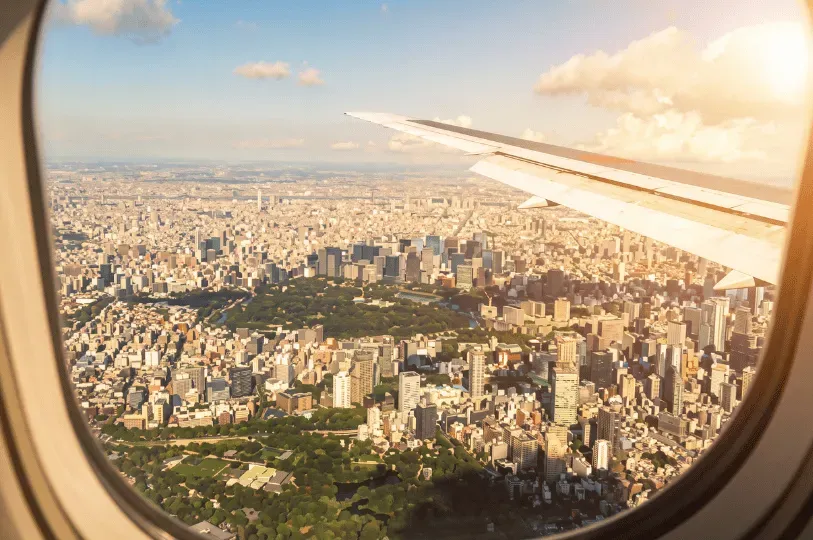
An aerial view of the dense Tokyo cityscape seen through an airplane window, highlighting a massive, lush green park surrounded by countless skyscrapers, with the airplane's wing visible against a bright, partly cloudy sky.

If you're planning your own trip, resist the urge to fill every hour. The city gives its best to those who arrive unhurried.

Anchor your days lightly. Leave real gaps, not just transitions. Turn the corner nobody turns. Board the train without knowing where you'll get off. Keep one meal unbooked, and let the city hand you something you couldn't have planned.

The luxury travel Tokyo promises isn't only found in the suites and the counters, though those are real. It's found in the ninety minutes you deliberately left empty — the space where the actual city, the one that lives between appointments, finally has room to reach you.

Come with a plan. Then leave enough room to lose it.

For more on how this city protects the quiet, unhurried moments that matter most, read The Art of Tokyo Privacy: Luxury Accommodations That Redefine Discretion.

Share this article

Recent Posts

A hotel room with a modern Japanese style interior.
By J.C. Yue • October 12, 2026
How luxury properties create true rest — a personal assistant on luxury sleep abroad, hotel rest experiences, and the amenities that help you sleep well.
A woman laying on a white bed on her phone with the covers slightly ruffled up, bright sunlight shin
By J.C. Yue • October 8, 2026
When every hour is accounted for, and the days blur into cities you can barely name — what does it feel like to lose your own time without noticing?
A hawker vendor preparing a meal in a container with his ingredients layed out in front.
By J.C. Yue • October 6, 2026
The local table test reveals if a restaurant truly belongs to its community — honest dining signs from 40+ destinations, from Penang to Positano and home.
A calm, peaceful residential street in Bangkok lined with buildings on either side with park vehicle
By J.C. Yue • October 5, 2026
Explore Bangkok residential neighborhoods and local districts off the beaten path — hidden neighborhoods and authentic travel through the city's quiet second side.
Two people having a conversation over cups of coffee in white mugs.
By J.C. Yue • October 1, 2026
Some souvenirs collect dust. The ones worth keeping are the conversations you never planned to have — and couldn't leave behind if you tried.
Tea cups and kettle setup placed near a window with white curtains.
By J.C. Yue • September 30, 2026
When home is never one place, rituals become the anchor. A reflection on the small, quiet habits, tea, a notebook, familiar coffee, that hold you steady across forty cities and counting.
A cozy hotel room interior with parted red curtains revealing a city view outside.
By J.C. Yue • September 29, 2026
Why the hotel floor experience shapes your luxury hotel stay. A personal assistant's luxury travel tips on choosing the best floor in a hotel.
A dimly lit chef’s table with two customers waiting as the chef prepares a meal behind the counter.
By J.C. Yue • September 28, 2026
Master chef's table etiquette when sharing an intimate dining experience with strangers — a personal assistant's guide to fine dining etiquette abroad.
A group of people in front of a coffee shop glass display choosing from the selection, a red stall e
By J.C. Yue • September 24, 2026
Forty cities. Forty sets of choices. A quiet reflection on how the smallest decisions can be the ones that cost you the most.
George Town heritage shophouses in Penang, Malaysia lined up in a busy street.
By J.C. Yue • September 22, 2026
Explore Penang travel beyond George Town's heritage streets — Penang food culture, hidden gems, and the quiet rise of luxury travel Penang.
Show More