The Art of Arrival in Kyoto: Understanding the First Moments of Traditional Hospitality

September 14, 2026 |J.C. Yue

The taxi stopped on a narrow lane in Higashiyama, and for a moment, nothing happened.

No revolving door. No marble lobby. No line of guests waiting to check in. Just a wooden gate, a swept stone path, and a woman in a kimono standing perfectly still, already bowing before I'd opened my door.

I've arranged arrivals in more than forty destinations over the past decade. I know the choreography of a grand hotel entrance by heart. But Kyoto traditional hospitality rewrote everything I thought I understood about being welcomed somewhere.

That first bow told me the stay had already begun.


What Makes Arrival in Kyoto Different

In most cities, arrival is a transaction. You give your name, hand over a card, sign a form, receive a key. It's efficient. It's forgettable.

Kyoto refuses this entirely.

Here, the ryokan arrival experience treats your first few minutes as sacred ground. Nothing is rushed. Nothing is processed. You are not a booking to be confirmed — you are a guest who has finally, at last, arrived.

The difference is felt before it's understood. And understanding it takes a little time.


The Weight of the First Bow

That woman at the gate is called the okami — often the female proprietor or head of house. Her bow isn't a greeting in the way we mean it. It's an offering.

I watched her hold the bow a beat longer than felt necessary by Western standards. The extra second is the whole point. It says: you matter more than my convenience.

Understanding Omotenashi: The Soul of Japanese Welcome Culture

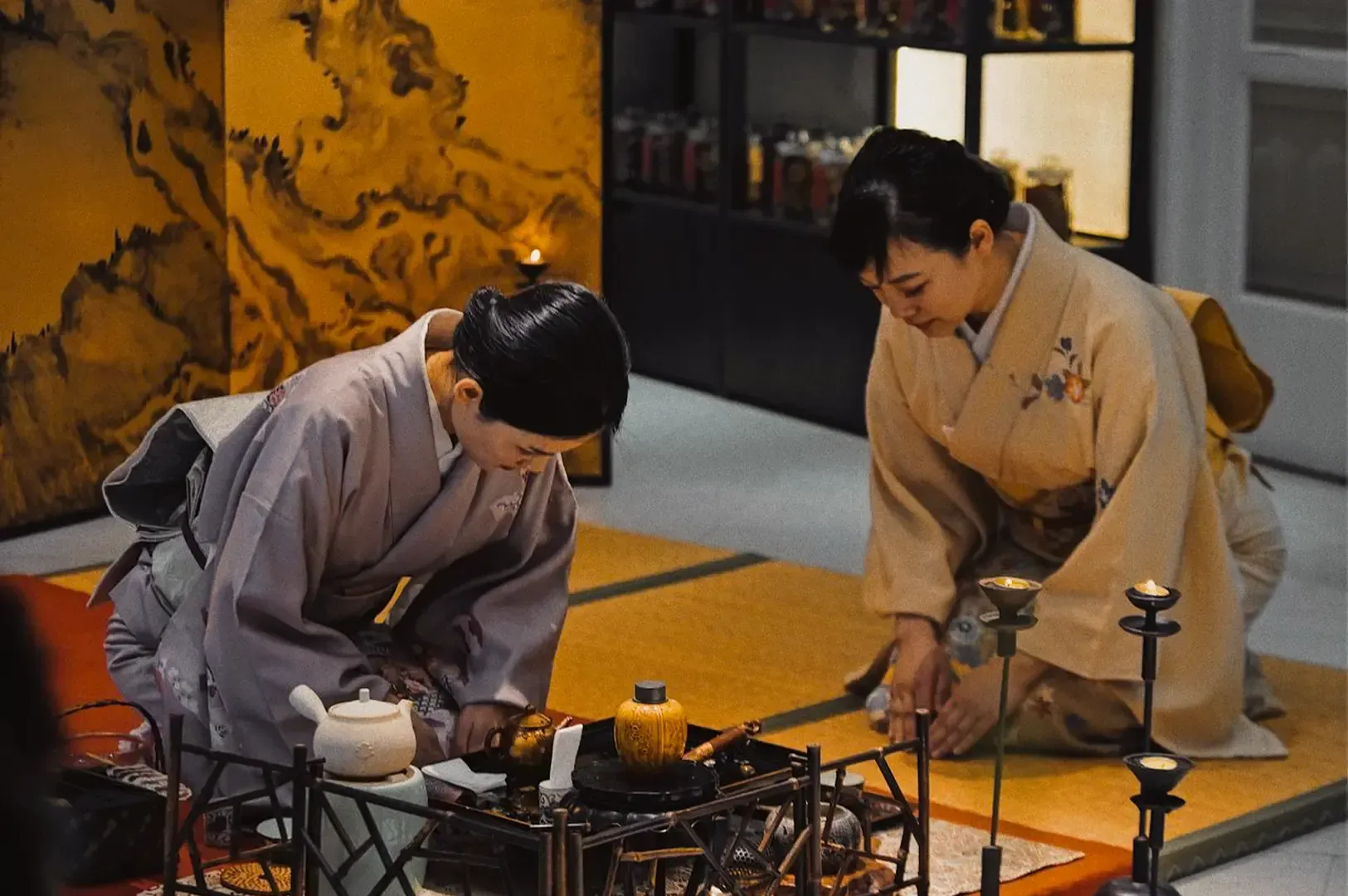
Two women in traditional Japanese clothing kneeling and bowing to each other to show respect with panels, trays, floor. and shelves in traditional Japanese style.

You cannot talk about arriving in Kyoto without talking about omotenashi.

The omotenashi meaning is often translated simply as "hospitality," but that word does it a disservice. It comes closer to wholehearted care given without expectation of anything in return — no tip, no upsell, no transaction hiding underneath.

The concept is woven deep into Japanese tea ceremony tradition, where a host anticipates every need of a guest before it's spoken.


Anticipation Over Reaction

In the hotels I know best, good service responds. You ask; they deliver.

Omotenashi works in reverse. The slippers are already turned to face you. The tea is already steeping. The room is already warmed to the season. Nobody asked what you needed because they'd already thought it through.

I've spent years learning to anticipate my employer's needs. Watching omotenashi in action felt like meeting the masters of my own craft.


Service Without a Spotlight

The other thing about this Japanese welcome culture is how quiet it stays.

There's no performance. No one lingers for praise. The care is delivered and then it disappears, leaving only the feeling that you've been looked after by someone who genuinely cared. You can read more about the roots of this philosophy through the Japan National Tourism Organization.

The Ritual of Removing Your Shoes

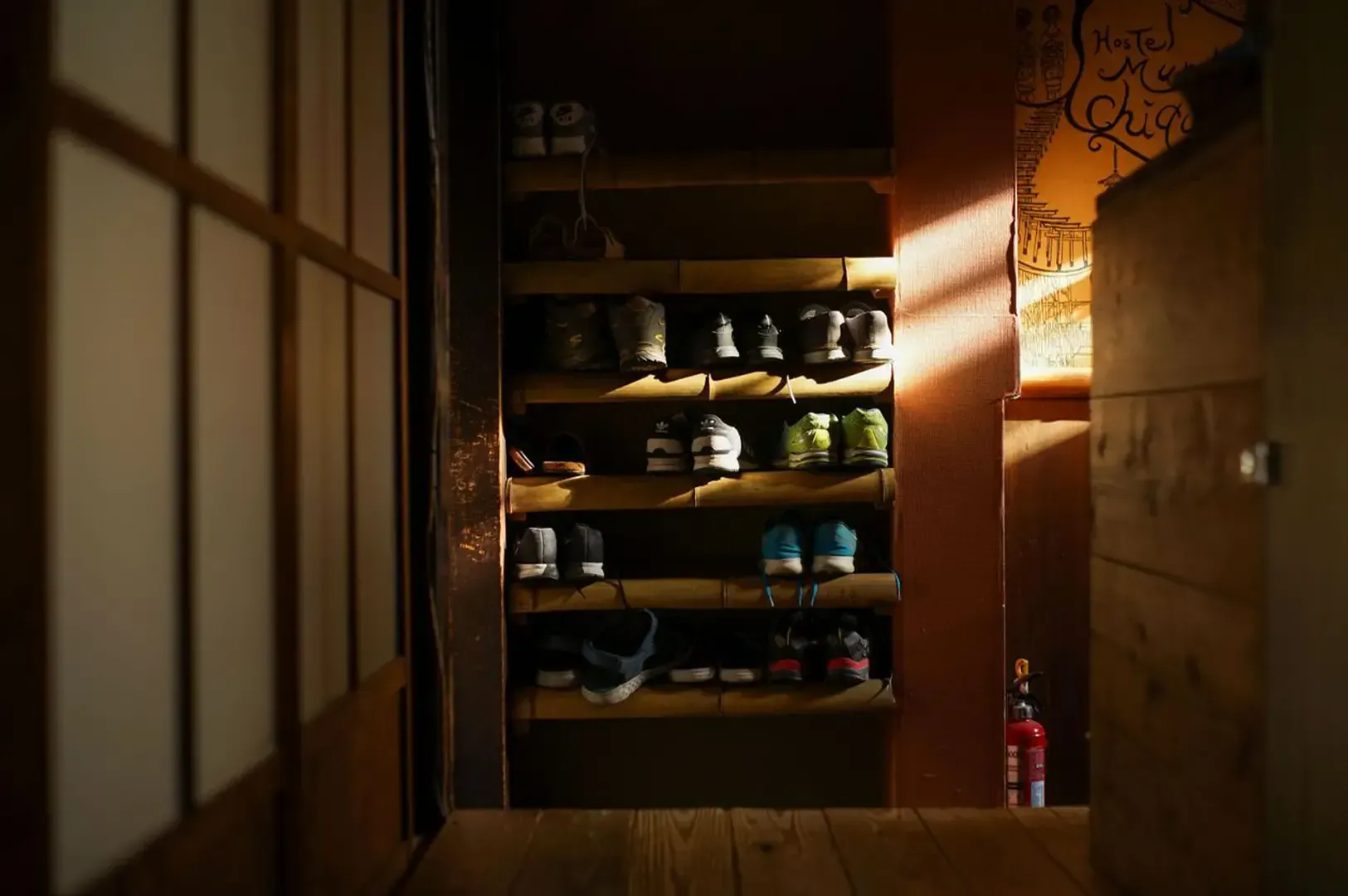
A number of shoes placed in a wooden shelf before a threshold with a traditional Japanese architecture.

The first physical act of arrival happens at the genkan — the sunken entryway where you leave your shoes behind.

This is not a formality. It's a threshold.

You are literally stepping out of the outside world. The dust of the street, the noise of travel, the version of you that was rushing to make a train — all of it stays at the door with your shoes.


Why the Genkan Matters

I remember fumbling with my laces that first time, self-conscious, aware I was being watched with patient kindness. The staff never rushed me. They simply waited, offering house slippers turned to the perfect angle.

The genkan is a small architectural detail that carries enormous cultural weight. Cross it, and you've agreed to a different pace of being.

The Tea Ceremony Welcome

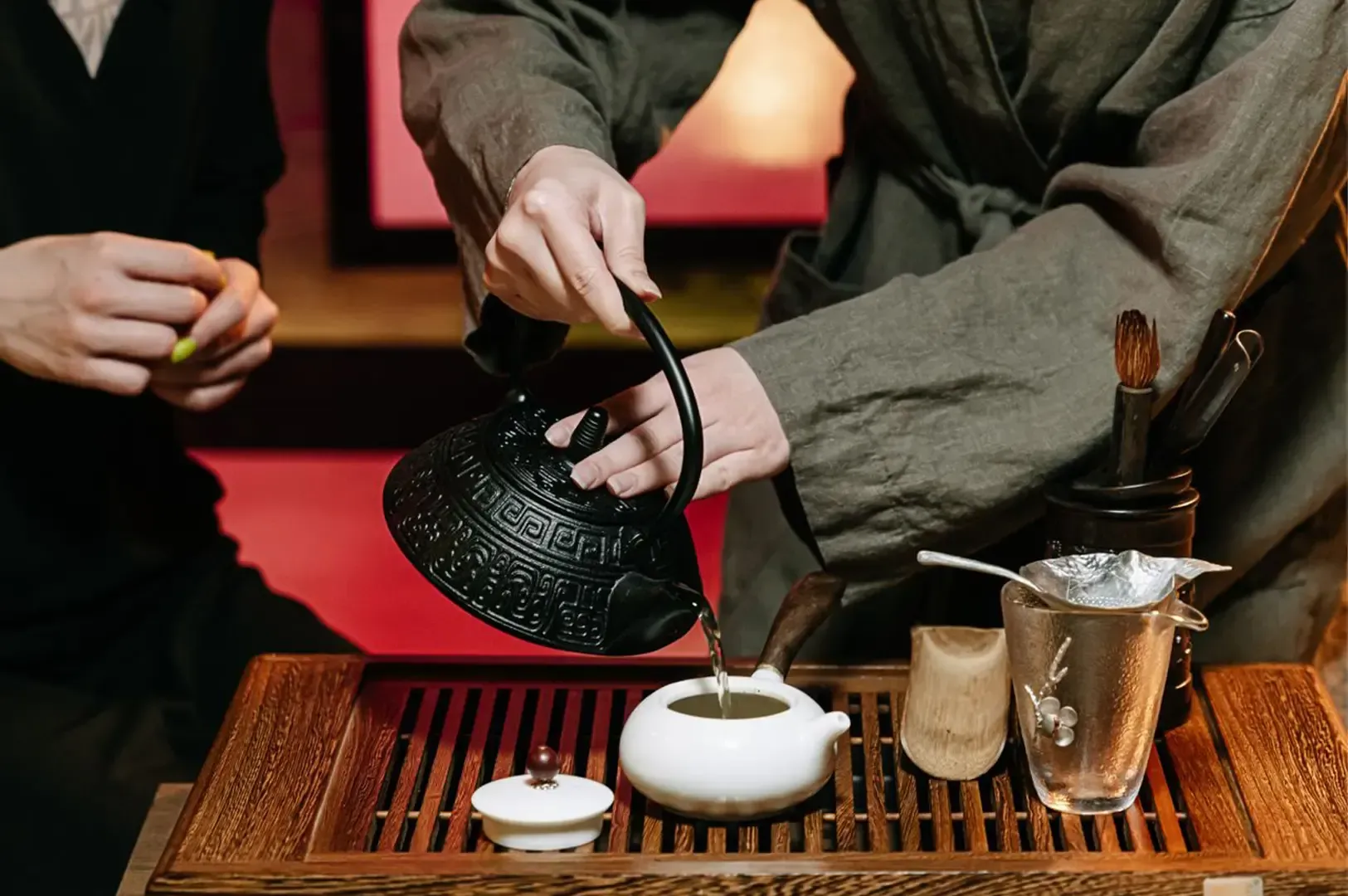
A medium shot of two people in traditional Japanese clothing pouring tea using a black tea pot in a white dinnerware on top of a wooden tray.

Once inside, you're led not to a front desk, but to your room — or sometimes to a small tatami sitting area where tea waits.

This welcome tea is one of the quiet glories of luxury travel Kyoto offers.


More Than a Drink

A warm cup of matcha or sencha arrives with a small seasonal sweet. You sit. You sip. You do nothing else.

The tea is a pause, deliberately built into your arrival. After a long journey, being asked to simply sit and drink feels almost radical. There's no paperwork competing for your attention, no phone buzzing on a counter.

The sweet beside the tea often reflects the exact moment of the year — a maple leaf shape in autumn, cherry blossom pink in spring. It's a small edible signal that you've arrived not just in a place, but in a season.


Silence as a Form of Service

Here is the thing that took me longest to understand.

In Kyoto, silence is not awkwardness — it's generosity.


Learning to Read the Quiet

Western service fills every gap with chatter. The upsell, the small talk, the "how was your flight?" repeated by three different staff members. It's warm, but it's also work — for them and, honestly, for you.

At a Kyoto ryokan, the staff move through the space almost soundlessly. They speak when needed and not a word more. The quiet gives you room to breathe.

I've come to believe this is one of the highest forms of care I've ever witnessed. To be left in peace, tended to without being talked at, is a luxury most travellers never even knew they wanted.


Seasonal Touches That Shape the First Impression

Everything about a Kyoto arrival is tuned to the season, and this attention to shun — the peak moment of anything — runs through the whole experience.


The Room Speaks of the Time of Year

Step into your room and you'll find a single flower arrangement in the tokonoma alcove, chosen for that week. A scroll on the wall might reference the current season. The view is framed to catch whatever the garden is doing right now.

Nothing is generic. The room you sleep in during November will feel different from the same room in April.

This deep respect for the natural calendar is central to the wider culture of Japan, and Kyoto — the old imperial capital — guards it more closely than anywhere else.


Kyoto as the Keeper of Tradition

There's a reason these rituals survive here with such purity. As the former capital for over a thousand years, Kyoto became the custodian of Japan's most refined cultural traditions.

The ryokan you arrive at isn't performing history for tourists. It's simply continuing to do what it has always done.


How First Moments Set the Tone for the Entire Stay

I've learned, across a decade of watching people arrive somewhere, that the first ten minutes decide everything.

Get them wrong, and a guest spends the whole stay slightly on edge. Get them right, and they exhale — and stay exhaled.


The Arrival Is a Promise

Kyoto understands this instinctively. The care you receive at the gate is a promise of the care to come. The bow, the shoes, the tea, the silence — each one tells you what kind of stay this will be.

By the time I reached my room that first evening, I already trusted the place completely. Nothing had been said about service standards. Everything had been shown.

Kyoto Arrival vs. the Western Hotel Check-In

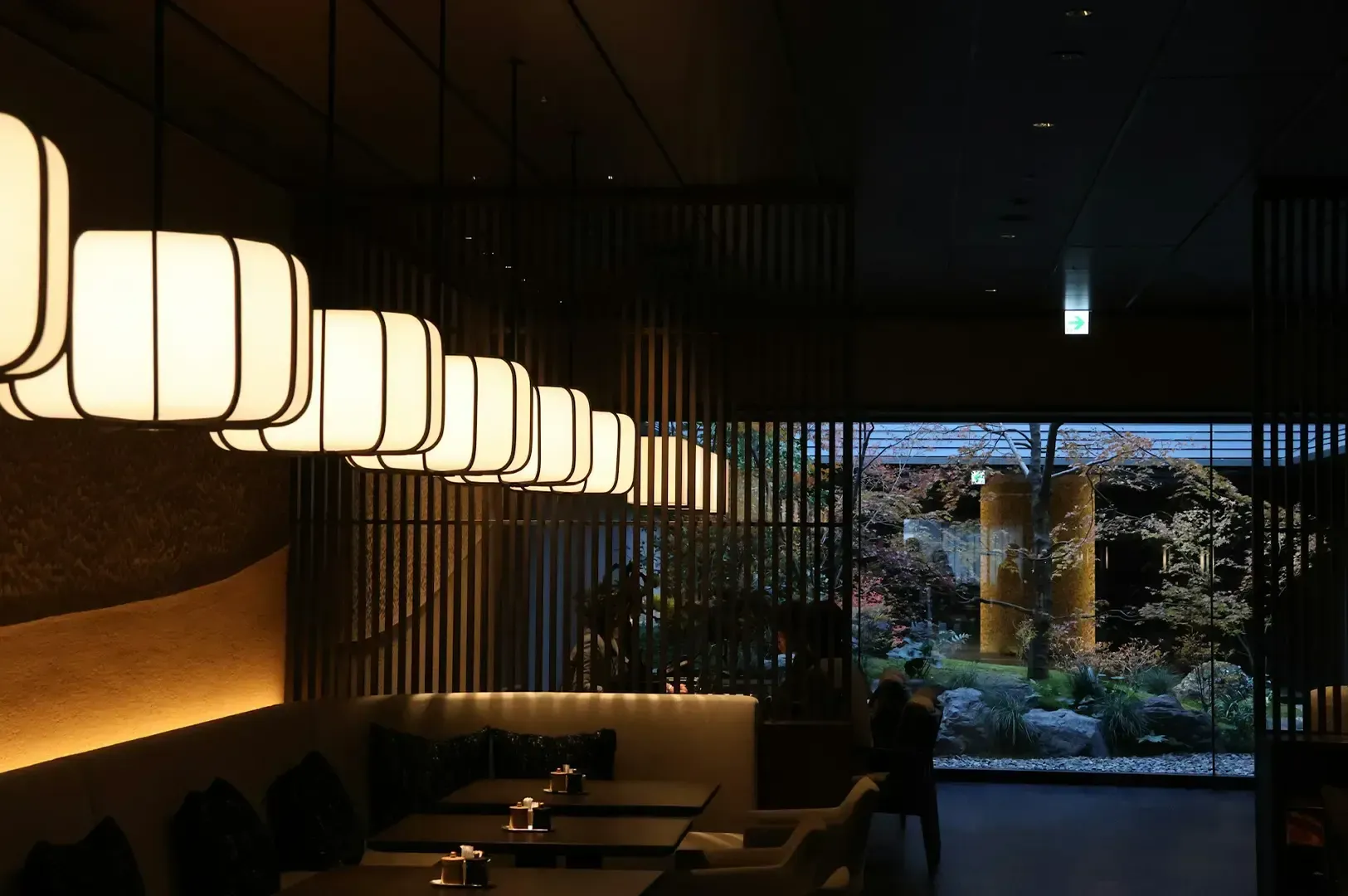
A dim and warmly lit Japanese establishment with an open entrance and empty seats and tables visible, giving a calm and slow ambience.

The contrast is worth sitting with, because it reveals two entirely different ideas of what hospitality means.


Efficiency Versus Presence

A luxury Western hotel arrival is built around efficiency and recognition. You're greeted by name, upgraded if you're lucky, and moved smoothly toward your room. It's impressive. It's designed to feel seamless.

A Kyoto ryokan arrival is built around presence and transformation. It's not trying to be fast. It's trying to change your state — to slow you down, to mark the threshold, to make you feel genuinely received.


Neither Is Wrong

I don't say this to diminish the grand hotels I've loved. There's real artistry in a flawless five-star check-in, and I've been grateful for it after many exhausting flights.

But the ryokan taught me something the hotels never could: that being welcomed slowly can be more generous than being welcomed well. You can explore Japan's broader travel etiquette through the Michelin Guide's Kyoto pages for a sense of how this care extends to the table, too.


A Quiet Guide to Receiving This Hospitality Well

If you're travelling to Kyoto, a few small things will help you meet this tradition with grace.


Slow Down Before You Arrive

Don't sprint from the station with your heart still racing. Arrive already willing to be still. The ritual works best when you meet it halfway.


Follow the Staff's Lead

Watch how shoes are removed. Wait to be shown your place. Let the tea be a pause, not an item to tick off.


Say Less, Notice More

You don't need to fill the silence. Let yourself be looked after. For many of us, that's the hardest and most rewarding part.


Why These First Moments Stay With You

Years later, I remember the grand lobbies as a blur. But I remember that woman at the gate in Higashiyama with perfect clarity — the swept path, the held bow, the tea that asked nothing of me.

The best arrivals aren't the fastest. They're the ones that make you feel human again after the machinery of travel.

Kyoto knows this better than anywhere I've been.

Bringing It All Together

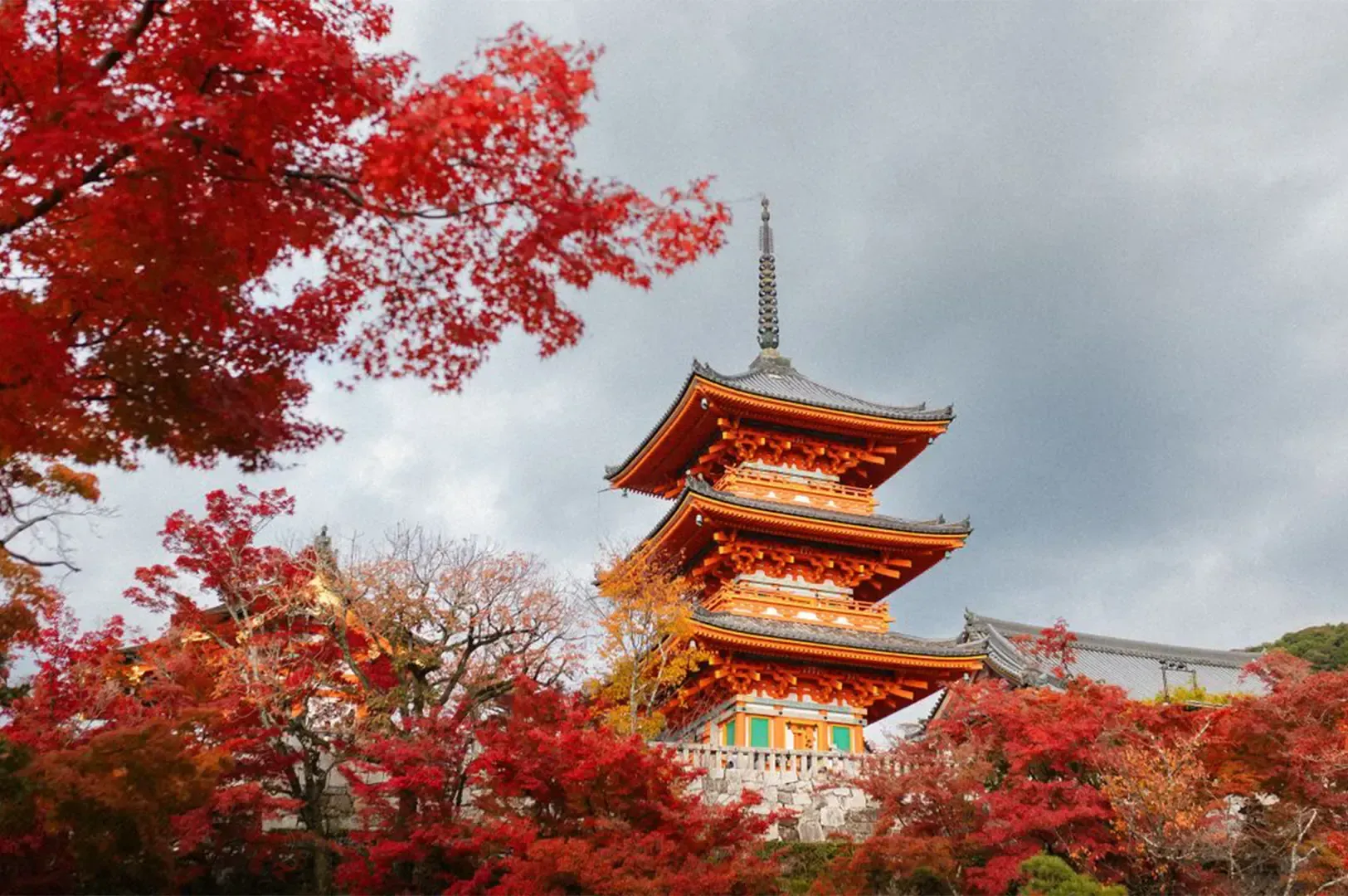
Wide angle shot of a white and orange building with Japanese traditional architecture with bright red tree leaves in the foreground framing the subject against a grey sky.

The art of arrival in Kyoto isn't about grandeur. It's about intention. The removed shoes, the welcome tea, the seasonal flower, the generous silence — each is a small act of care that says you are here now, and that is enough.

If you take one thing from a decade of my arrivals, let it be this: pay attention to how a place first receives you. In Kyoto, those first moments aren't a prelude to the experience.

They are the experience.

To go deeper into where these rituals are practised most beautifully, read Kyoto's Exclusive Private Ryokans.

Share this article

Recent Posts

A hotel room with a modern Japanese style interior.
By J.C. Yue • October 12, 2026
How luxury properties create true rest — a personal assistant on luxury sleep abroad, hotel rest experiences, and the amenities that help you sleep well.
A woman laying on a white bed on her phone with the covers slightly ruffled up, bright sunlight shin
By J.C. Yue • October 8, 2026
When every hour is accounted for, and the days blur into cities you can barely name — what does it feel like to lose your own time without noticing?
A hawker vendor preparing a meal in a container with his ingredients layed out in front.
By J.C. Yue • October 6, 2026
The local table test reveals if a restaurant truly belongs to its community — honest dining signs from 40+ destinations, from Penang to Positano and home.
A calm, peaceful residential street in Bangkok lined with buildings on either side with park vehicle
By J.C. Yue • October 5, 2026
Explore Bangkok residential neighborhoods and local districts off the beaten path — hidden neighborhoods and authentic travel through the city's quiet second side.
Two people having a conversation over cups of coffee in white mugs.
By J.C. Yue • October 1, 2026
Some souvenirs collect dust. The ones worth keeping are the conversations you never planned to have — and couldn't leave behind if you tried.
Tea cups and kettle setup placed near a window with white curtains.
By J.C. Yue • September 30, 2026
When home is never one place, rituals become the anchor. A reflection on the small, quiet habits, tea, a notebook, familiar coffee, that hold you steady across forty cities and counting.
A cozy hotel room interior with parted red curtains revealing a city view outside.
By J.C. Yue • September 29, 2026
Why the hotel floor experience shapes your luxury hotel stay. A personal assistant's luxury travel tips on choosing the best floor in a hotel.
A dimly lit chef’s table with two customers waiting as the chef prepares a meal behind the counter.
By J.C. Yue • September 28, 2026
Master chef's table etiquette when sharing an intimate dining experience with strangers — a personal assistant's guide to fine dining etiquette abroad.
A group of people in front of a coffee shop glass display choosing from the selection, a red stall e
By J.C. Yue • September 24, 2026
Forty cities. Forty sets of choices. A quiet reflection on how the smallest decisions can be the ones that cost you the most.
George Town heritage shophouses in Penang, Malaysia lined up in a busy street.
By J.C. Yue • September 22, 2026
Explore Penang travel beyond George Town's heritage streets — Penang food culture, hidden gems, and the quiet rise of luxury travel Penang.
Show More