


The Service Corridor: The Invisible Architecture Behind Seamless Hotel Stays

September 8, 2026 |J.C. Yue

There's a door in every great hotel that guests never open.

It sits flush with the wall, sometimes papered to disappear, sometimes tucked behind a mirror or a flower arrangement. Push it, and the hush of the lobby gives way to something else entirely — bare concrete, fluorescent light, the fast clatter of trolleys and low voices moving with purpose.

I've walked through that door more times than I can count.

After a decade of accompanying my employer across more than forty destinations, I've learned that the calm you feel in a beautiful hotel is not an accident. It's built. And most of it happens on the other side of that hidden door, in a place the staff simply call the service corridor.


What the Service Corridor Actually Is

Every hotel has two floor plans laid over each other.

One is the version you see — the marble, the orchids, the concierge desk polished to a shine. The other runs directly behind it: a network of narrow passages, service lifts, and staging rooms that mirror the guest floors almost exactly.

This is the spine of any luxury hotel service. It's where the linen moves, where the room-service trays wait, where housekeeping restocks before you've even noticed a towel is missing. The whole point is that you're never meant to see it working.

The idea isn't new. Grand hotels have separated guest and staff routes since the nineteenth century, a principle you can trace through the history of the hospital ity industry itself.

The First Time I Noticed It

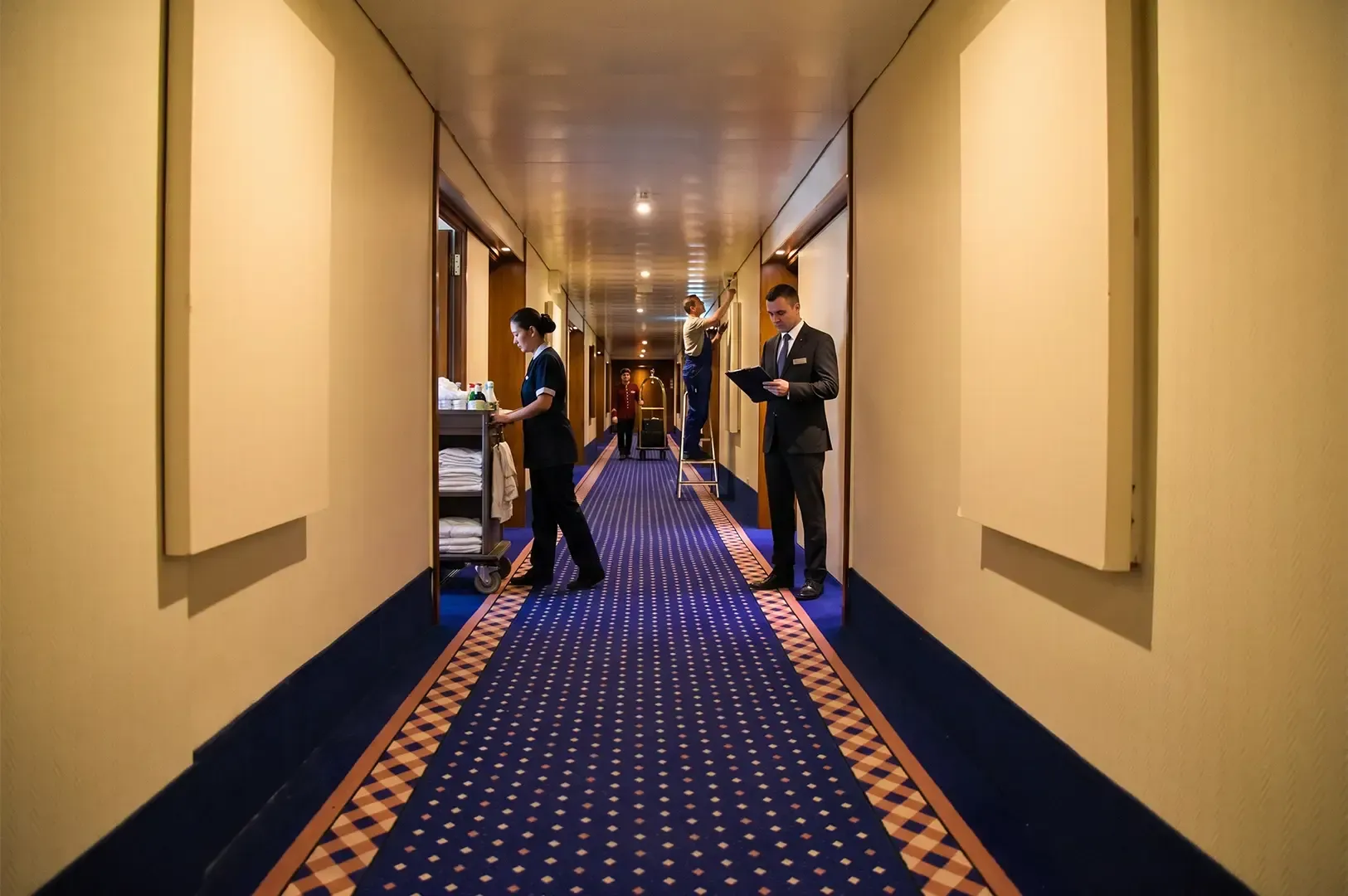
A long corridor with light yellow walls and blue and orange patterned floor, with hotel staff doing their duties all over the corridor.

I remember a hotel in Tokyo, early in my career.

I'd stepped out to find ice and took a wrong turn. A discreet panel had been left ajar, and through it I saw the real machinery of the place — a butler pressing a shirt, a runner checking a tray against a printed order, someone quietly wiping a spill I would never have known existed.

Nobody was rushing in a panic. They were rushing in rhythm.

That was the moment I understood that a seamless hotel experience isn't the absence of effort. It's effort perfectly hidden.


Why the Corridor Matters More Than the Lobby

Guests judge a hotel by its front. Staff judge it by its back.

Ask anyone who works in five-star hotel service and they'll tell you the same thing: the quality of a stay is decided in the corridor, not the suite. If the back-of-house runs well, the guest side glides. If it doesn't, no amount of lobby marble can hide the cracks.


Speed You're Not Supposed to Feel

The best hotels obsess over seconds.

There's a metric in hotel staff operations for how quickly a room-service order reaches your door, how fast a request for extra pillows is met, how long a housekeeper takes to turn a room. Behind the scenes, this is measured, timed, refined.

You experience it only as a feeling: that was fast, and I barely had to ask.


Sightlines and Silence

Great service architecture is also about what you can't hear.

Service lifts are placed away from guest rooms. Corridors are soundproofed. Trolleys have rubber wheels. The entire system is engineered so that the work stays invisible and the quiet stays intact — a discipline the field of hotel management takes seriously.

The People Who Live in the Corridor

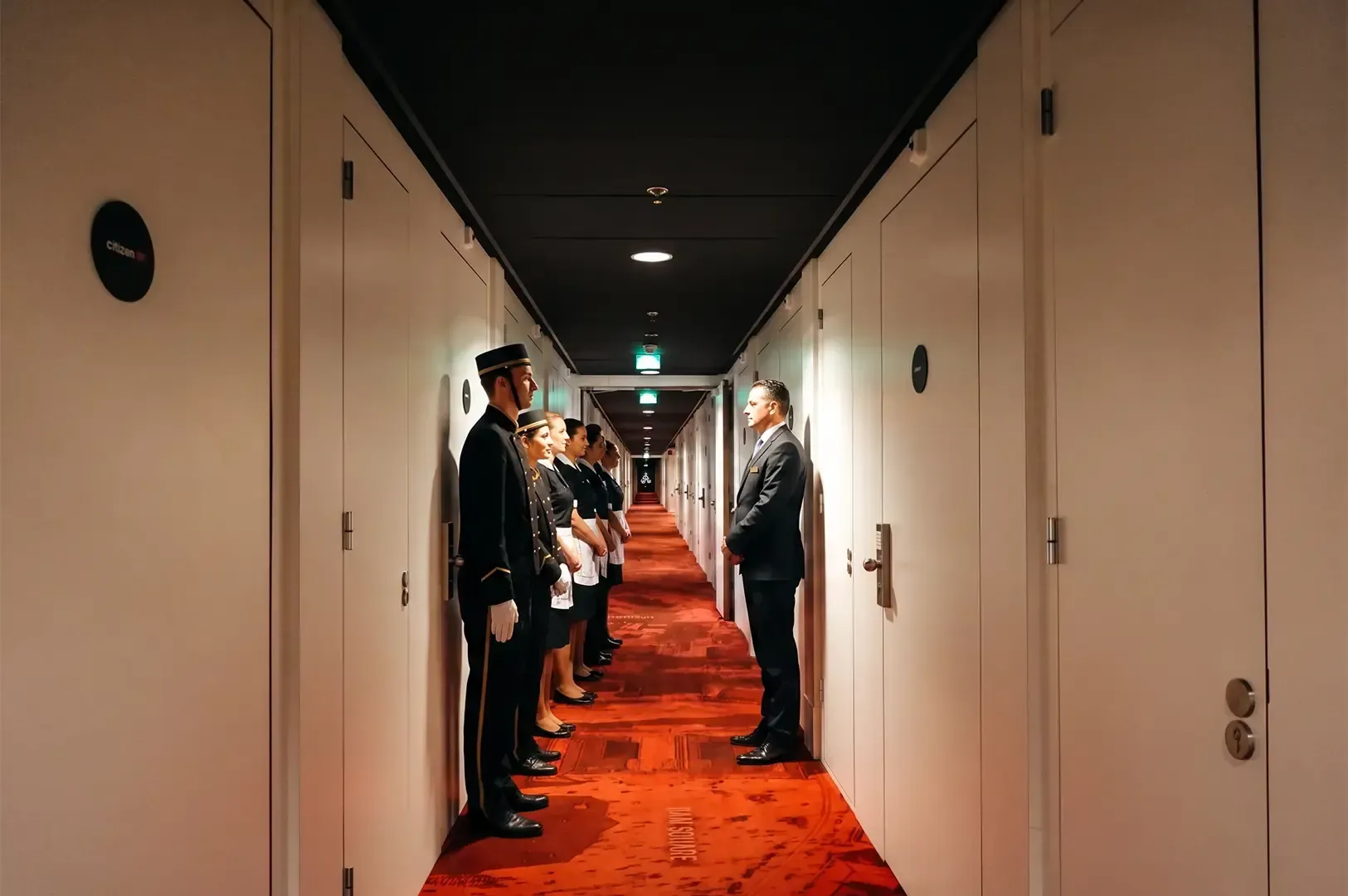
A group of hotel staff lined up in a corridor with white walls and doors and orange tiled floor.

The corridor isn't just a space. It's a community.

I've come to know these teams over the years, and they're the reason any behind the scenes hotel operation holds together.


The Runners

They move constantly — trays up, plates down, forgotten toothbrushes delivered in minutes. A good runner knows the building better than the architect.


The Housekeepers

The most underestimated people in any hotel. A housekeeper reads a room like a diary — the untouched minibar, the extra blanket pulled from the closet, the side of the bed you actually sleep on. They adjust without ever being told.


The Butlers

In the finest properties, the butler is the bridge between the two worlds. They cross from corridor to suite and back all day, carrying your preferences with them. The tradition of the butler is old, but in modern luxury it's very much alive.


The Night Shift

There's a whole other world after midnight. Fewer people, softer light, the building resting. I've written before about how much I respect the ones who keep watch while everyone sleeps.


How the Corridor Learns You

Here's the part most guests never realize.

The corridor remembers.

When you mention in passing that you like still water, not sparkling, that note travels the back-of-house before your next request. Your preferences are logged, shared between shifts, carried from the front desk to housekeeping to the kitchen. The hotel builds a quiet portrait of you, and the corridor is where it's kept.

This is the engine behind personalization in modern tourism — not magic, but memory, moved carefully from one person to the next.


The Preference Sheet

Somewhere in that corridor is a document with your name on it. Room temperature. Pillow type. Whether you want turndown or would rather not be disturbed.

It sounds clinical. In practice, it's the difference between being served and being known.


What Happens When the Corridor Fails

I've seen the other side too.

A hotel in a city I won't name — beautiful on the surface, chaos behind the door. Orders lost between kitchen and lift. Housekeeping stretched too thin. A preference sheet that clearly no one read.

Nothing dramatic happened. There was no single disaster. But the whole stay felt effortful in a way I couldn't quite place at first. The seams showed, and once you see the seams, you can't unsee them.

That's the strange truth of luxury hotel service: when it works, you notice nothing. When it fails, you notice everything.

Reading the Corridor as a Guest

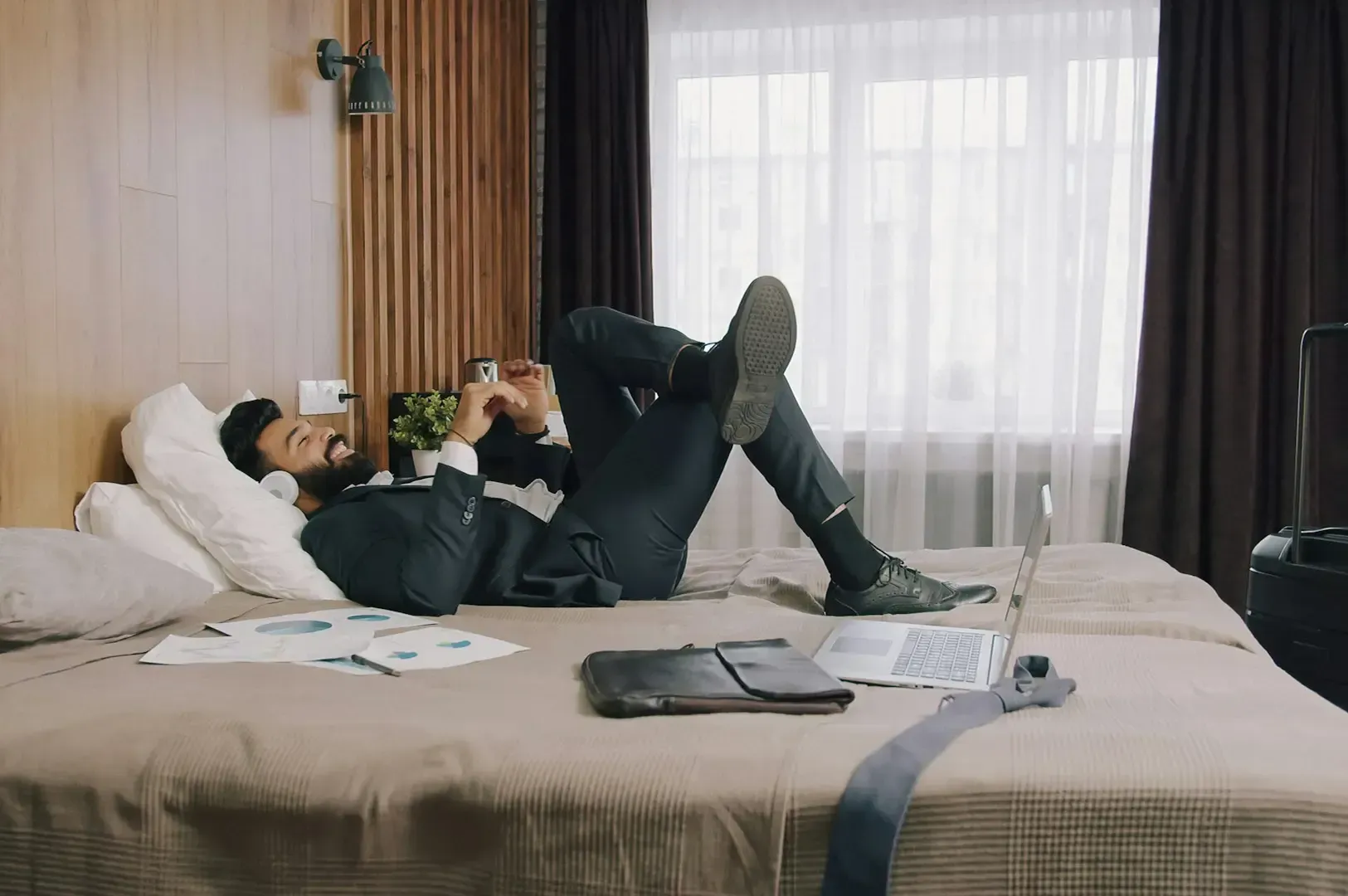
A hotel guest wearing a business attire laying relaxed on a bed with headphones and a laptop, papers, and a leather bag placed beside him, a parted curtain in front of a widow at the back.

You don't need a staff badge to sense whether a hotel's back-of-house is healthy. After enough stays, you learn the signs.


Watch How Fast the Small Things Move

Order a pot of tea. Ask for one extra towel. The speed of the small request tells you more than the grandest suite. A well-run corridor answers quietly and quickly.


Notice the Staff's Faces

Calm, unhurried staff mean a calm back-of-house. Frazzled ones mean the corridor is struggling, no matter how composed the lobby looks.


Pay Attention to Timing

Turndown that arrives while you're at dinner. Breakfast that comes exactly when promised. Good timing is the corridor's signature — it means the two floor plans are talking to each other properly.

For travelers who want to understand service standards more formally, national tourism bodies like the Singapore Tourism Board set benchmarks that shape what "seamless" really means across the industry.

The Cultural Differences I've Noticed

A variety of country flags hung on different lines in front of a light yellow painted building.

The corridor works differently around the world, and that's part of what makes travel worth it.


Japan: Precision as Respect

In Japan, the back-of-house runs on a quiet reverence. Service isn't performed for you; it's offered to you. The corridor is silent, exact, and almost invisible — an extension of the wider culture of Japan itself.


Europe: Tradition and Formality

In the grand hotels of Europe, the corridor carries history. There's a formality to it, a sense of inherited craft passed down through generations of staff.


Singapore: Warmth Meets Efficiency

At home, the balance tips beautifully. The service is warm without being intrusive, efficient without feeling cold — a reflection of the city itself.


Why I've Come to Love the Hidden Door

For years, I saw the corridor as simply the place where my requests were fulfilled.

Now I see it differently.

It's where the real hospitality lives — not in the chandelier, but in the runner who remembers your room number, the housekeeper who notices you're unwell and quietly leaves extra water, the butler who guesses right before you've asked.

The lobby is the promise. The corridor is the keeping of it.

What This Means for Your Next Stay

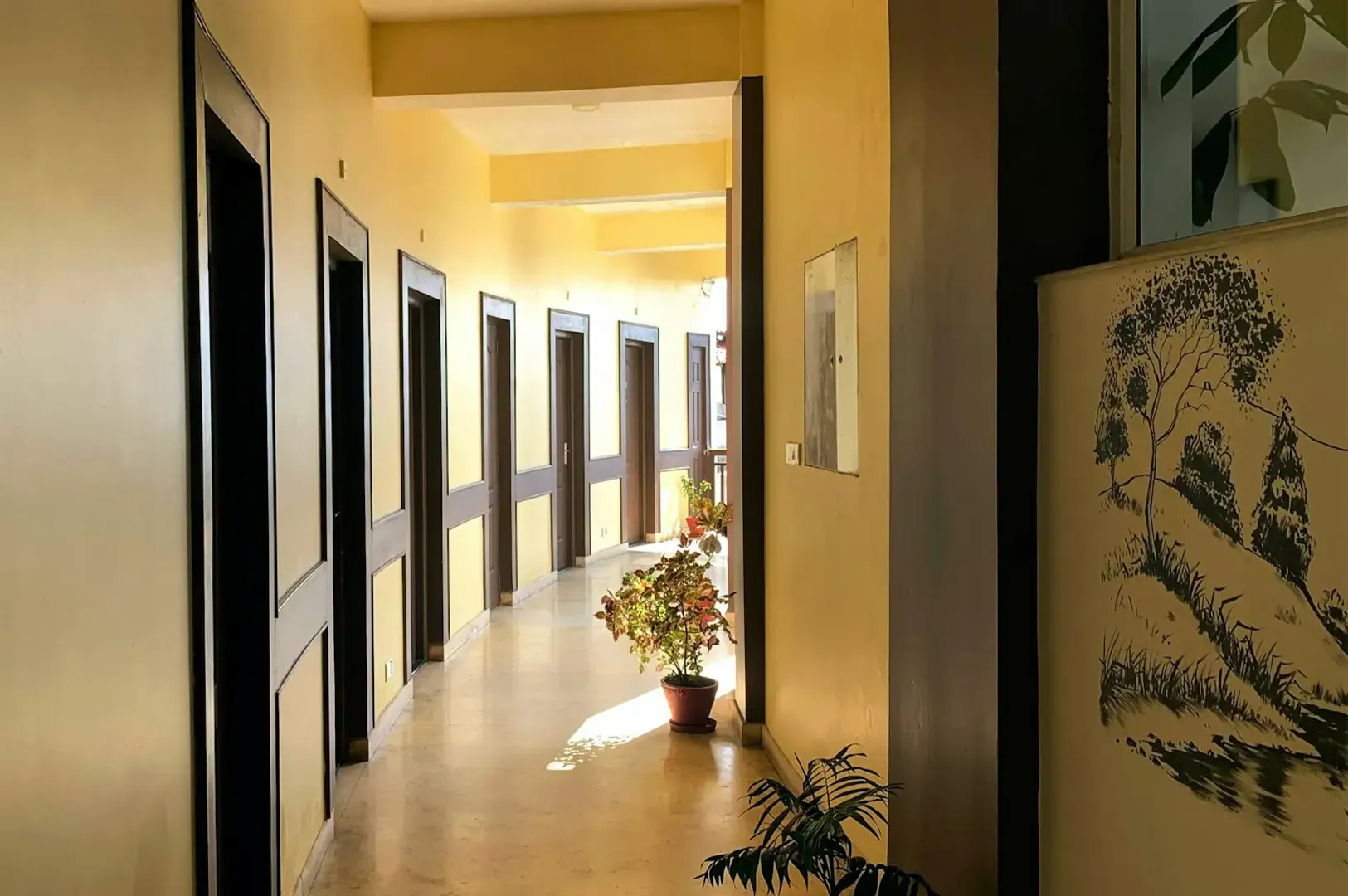
A long corridor curving the the right, with different guest room doors lining the left wall and plant pots and painting decorations on the right.

You don't need to go looking for the hidden door. You're not meant to.

But knowing it's there changes how you travel. You start to appreciate the invisible effort behind the calm. You tip the runner who's covered miles for you. You thank the housekeeper by name. You recognize that a truly seamless hotel experience is the work of dozens of people you'll never see.

And on the rare occasion you catch a glimpse through an open panel — a flash of concrete, a trolley, a quiet team moving in rhythm — you'll understand what you're actually looking at.

Not the back of the hotel.

The heart of it.

For a fuller look at the people and systems that keep a great hotel running quietly, read Luxury Hotel: Behind the Scenes.

Share this article

Recent Posts

A hotel room with a modern Japanese style interior.
By J.C. Yue • October 12, 2026
How luxury properties create true rest — a personal assistant on luxury sleep abroad, hotel rest experiences, and the amenities that help you sleep well.

A woman laying on a white bed on her phone with the covers slightly ruffled up, bright sunlight shin
By J.C. Yue • October 8, 2026
When every hour is accounted for, and the days blur into cities you can barely name — what does it feel like to lose your own time without noticing?

A hawker vendor preparing a meal in a container with his ingredients layed out in front.
By J.C. Yue • October 6, 2026
The local table test reveals if a restaurant truly belongs to its community — honest dining signs from 40+ destinations, from Penang to Positano and home.

A calm, peaceful residential street in Bangkok lined with buildings on either side with park vehicle
By J.C. Yue • October 5, 2026
Explore Bangkok residential neighborhoods and local districts off the beaten path — hidden neighborhoods and authentic travel through the city's quiet second side.

Two people having a conversation over cups of coffee in white mugs.
By J.C. Yue • October 1, 2026
Some souvenirs collect dust. The ones worth keeping are the conversations you never planned to have — and couldn't leave behind if you tried.

Tea cups and kettle setup placed near a window with white curtains.
By J.C. Yue • September 30, 2026
When home is never one place, rituals become the anchor. A reflection on the small, quiet habits, tea, a notebook, familiar coffee, that hold you steady across forty cities and counting.

A cozy hotel room interior with parted red curtains revealing a city view outside.
By J.C. Yue • September 29, 2026
Why the hotel floor experience shapes your luxury hotel stay. A personal assistant's luxury travel tips on choosing the best floor in a hotel.

A dimly lit chef’s table with two customers waiting as the chef prepares a meal behind the counter.
By J.C. Yue • September 28, 2026
Master chef's table etiquette when sharing an intimate dining experience with strangers — a personal assistant's guide to fine dining etiquette abroad.

A group of people in front of a coffee shop glass display choosing from the selection, a red stall e
By J.C. Yue • September 24, 2026
Forty cities. Forty sets of choices. A quiet reflection on how the smallest decisions can be the ones that cost you the most.

George Town heritage shophouses in Penang, Malaysia lined up in a busy street.
By J.C. Yue • September 22, 2026
Explore Penang travel beyond George Town's heritage streets — Penang food culture, hidden gems, and the quiet rise of luxury travel Penang.

Show More